


High Quality HWF10X/22mm Stereo Microscope for Clear Observation and Precision Inspection
When I help customers choose a stereo Microscope, I usually start with one simple question: what kind of work will you do with it every day? Some users need to inspect circuit boards. Some check jewelry, small mechanical parts, plastic components, or laboratory samples. Others need a dependable microscope for teaching, repair work, or product development. The right microscope should make these jobs easier, not create more work.
Our High Quality HWF10X/22mm Stereo Microscope is designed for clear three-dimensional observation, comfortable viewing, stable focusing, and practical inspection of Small Parts and surface details. The HWF10X/22mm specification is an important part of the optical configuration. The WF10X eyepiece provides 10X magnification, while the 22mm field number describes the viewing field of the eyepiece. In daily use, this type of wide-field eyepiece can help users see a useful area of the sample without feeling that the view is too narrow.
At Ningbo Huaguang Precision Instrument Co., Ltd., we produce educational microscopes, Industrial Inspection microscopes, professional Jewelry Inspection microscopes, optical components, and precision injection molding products. We understand that microscope buyers are not only purchasing lenses and a stand. They are purchasing a working tool that must be comfortable, stable, easy to maintain, and suitable for a real inspection process.
Our products are exported to more than 20 countries and regions, including America, Brazil, Germany, the Netherlands, and Japan. Through communication with customers in different markets, we have learned that a useful microscope must combine optical performance with practical service. The product should match the sample, the operator, the working distance, the lighting conditions, the camera requirements, and the delivery plan.
In this product page, I will explain what the High Quality HWF10X/22mm Stereo Microscope is designed to do, how the optical system works, which applications it can support, how to select the right configuration, and how we manage inspection, packaging, and delivery.
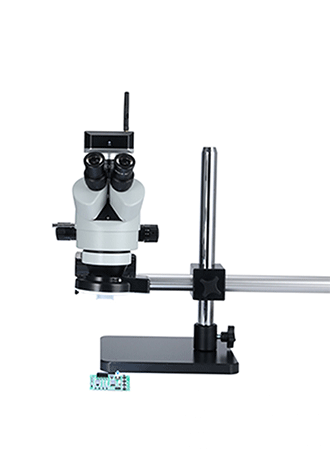
A stereo microscope is an optical instrument used to view solid objects at an enlarged scale. Unlike a compound microscope that is often used for prepared slides and very small specimens, a stereo microscope is designed for practical observation of objects with shape, height, edges, and surface structure.
Our High Quality HWF10X/22mm Stereo Microscope uses a binocular viewing arrangement. The operator looks through two eyepieces, and the optical paths provide a natural three-dimensional impression. This is useful when checking components that are not flat. For example, a connector may have raised pins, a mechanical part may have a curved edge, and a jewelry setting may contain several different heights.
The term HWF10X/22mm generally refers to a wide-field eyepiece with 10X magnification and a 22mm field number. The exact field of view at the sample also depends on the objective lens, auxiliary lens, zoom system, and other optical parts. For this reason, I recommend checking the complete optical configuration rather than judging the microscope only by the eyepiece name.
A wide viewing field can be helpful during inspection. When the operator can see more of the sample at one time, it may be easier to locate a component, position a tool, compare nearby details, or move from one inspection area to another. This is especially useful in electronics assembly, repair work, education, and general quality control.
The microscope is also designed for stable focusing. Focusing allows the operator to adjust the image until the required detail appears sharp. Small differences in sample height can affect image clarity, so a smooth focusing mechanism is important for daily work.
Depending on the selected model and configuration, the microscope may be used with different stands, illumination systems, holders, auxiliary lenses, or imaging accessories. We confirm the exact configuration according to the customer’s application and order requirements.
The working principle of a stereo microscope is quite straightforward. Light reaches the sample, the optical system collects the reflected light, and the lenses enlarge the image. The two optical paths view the sample from slightly different angles. The brain combines these views and creates a sense of depth.
This three-dimensional view is one of the main reasons stereo microscopes are used for assembly and inspection. The operator can better understand the position of a component, the height of a solder joint, the shape of a metal edge, or the structure of a jewelry setting.
When using a microscope for electronics repair, a flat digital image may show a solder point clearly, but it may not give the same natural feeling of depth. With stereo observation, the operator can judge the position of the soldering iron, tweezers, wire, and component more easily. This does not remove the need for skill, but it can make the work more comfortable and controlled.
Magnification tells us how large the object appears through the microscope. The field of view tells us how much of the sample can be seen at one time. These two factors are closely related.
Higher magnification can reveal smaller details, but it normally reduces the visible area. A wider field of view makes it easier to locate parts and understand the surrounding area, but it may not show the smallest details as strongly as a higher magnification setting.
The HWF10X/22mm eyepiece is designed around a practical viewing format. The “22mm” field number is not the same as a guaranteed 22mm field of view at the sample. The final viewing area depends on the complete optical system. We recommend confirming the actual field of view, magnification range, and working distance for the selected microscope configuration.
| Optical Term | Simple Meaning | Practical Importance |
|---|---|---|
| Magnification | How large the sample appears | Helps users observe small details. |
| Field of view | How much of the sample is visible | Helps users locate parts and inspect larger areas. |
| Working distance | Space between the lens and sample | Provides room for tools, hands, and sample movement. |
| Depth of field | How much depth appears acceptably sharp | Helps when inspecting objects with different heights. |
| Eyepiece field number | A specification related to the viewing field | Helps compare eyepiece viewing formats. |
The table is a general explanation of common microscope terms. The final performance of a microscope depends on the objective, eyepiece, optical design, sample, lighting, and operator settings.
Even a good optical system cannot provide a clear image if the microscope is not focused correctly. The focusing mechanism allows the user to adjust the optical position according to the height of the sample.
In practical work, the operator may move from a flat PCB surface to a raised connector, from a metal plate to a small screw, or from the edge of a gemstone to its setting. Each area may need a small focusing adjustment. A smooth focusing mechanism makes this process easier and helps reduce unnecessary hand movement.
Stable focusing is also important for repeatable inspection. If the focus changes easily after adjustment, the operator may need to correct it again and again. A well-assembled focusing system should move smoothly and hold its position during normal use.
The binocular optical design allows users to observe with both eyes. This supports a more natural viewing experience and can be helpful during long inspection sessions. The operator can adjust the eyepiece position according to personal viewing comfort.
Comfort is not only related to the eyepieces. The height of the stand, the position of the sample, the viewing angle, the lighting, and the operator’s sitting posture also matter. We recommend placing the microscope so that the user can keep the shoulders relaxed and avoid bending the neck too much.
The HWF10X/22mm eyepiece is a key part of this microscope configuration. The 10X magnification provides practical enlargement, while the 22mm field number represents a wide-field eyepiece format.
A wide-field eyepiece can be useful when the operator needs to inspect a broader area or locate a small part before focusing on a particular detail. It can also make the viewing experience feel less restricted during routine inspection.
The exact image size and field of view depend on the complete optical arrangement. If a customer has a specific requirement for magnification, field diameter, working distance, or image coverage, we confirm the full configuration before production.
Our stereo microscope is designed for stable focusing and comfortable adjustment. The focusing control should allow the operator to move the image into focus without sudden movement or unnecessary resistance.
This is useful for small components and uneven samples. When inspecting a connector, a jewelry setting, or a machined part, the operator may need to focus on different heights. Smooth focusing supports this kind of work.
The stereo optical system helps users observe the shape and depth of solid objects. It is suitable for tasks where the operator needs to see more than a flat surface.
For example, during mechanical inspection, the user may need to check an edge, groove, hole, or raised section. During jewelry inspection, the user may need to observe stone settings, prongs, polished surfaces, and small scratches. During electronics assembly, the user may need to position a component accurately on a board.
Different applications require different supporting equipment. Some users need a large base. Some need a Long Working Distance. Some need a ring light or another illumination arrangement. Others need a camera, monitor, or special sample holder.
We can discuss these requirements before confirming the order. This is important because the same microscope body may be used in different working environments, but the stand, lighting, and accessories can change the overall user experience.
In inspection work, the operator usually needs both detail and context. It is not enough to see one tiny point if the surrounding component cannot be located. It is also not enough to see a large area if the important defect is too small to identify.
The HWF10X/22mm optical format can support a useful balance for many routine observation tasks. The exact result depends on the objective lens and complete microscope design. We help customers choose the optical combination according to the sample and inspection target.
A stereo microscope is often used while the operator is handling a sample. This may involve tweezers, screwdrivers, soldering tools, brushes, small holders, or other instruments.
A suitable working distance gives the operator room to work under the microscope. If the lens is too close to the sample, tools may hit the optical system or the operator may have difficulty positioning the part. If the working distance is too long, the selected optical configuration may not provide the required image quality.
Many industrial inspection tasks are repeated hundreds of times. A microscope that is difficult to adjust can make the operator tired. Comfortable binocular viewing, smooth focusing, suitable lighting, and a stable stand can make a real difference during a full working day.
We recommend checking the microscope with the actual sample whenever possible. A model that feels comfortable for one application may not be the best arrangement for another. The operator’s posture and the sample handling method should be considered together.
When the microscope is used with a suitable camera system, images can be displayed, recorded, or shared. This can support quality records, training, product discussions, and communication between departments.
For example, a quality inspector may save an image of a surface defect. A trainer may show a soldering process to new workers. An engineer may share a close-up image with a customer. The camera, adapter, software, and display must be compatible with the microscope configuration.
Image recording is useful, but it should not automatically be treated as calibrated measurement. If a customer needs accurate dimensional measurement, the complete camera and software system should be calibrated and verified for that purpose.
Electronics assembly is a common application for stereo microscopes. Small circuit boards and components often contain details that are difficult to inspect with the naked eye.
Our High Quality HWF10X/22mm Stereo Microscope can be used for checking solder joints, connectors, circuit board surfaces, component placement, wires, switches, and small electronic parts. The binocular stereo view helps the operator understand the height and position of components.
During PCB repair, users may inspect solder bridges, damaged pads, missing solder, lifted components, contamination, and small mechanical damage. The microscope can also support inspection before and after rework.
When repairing electronic products, the operator often needs to hold a small component with one hand and use a tool with the other. A microscope with suitable working distance and stable focusing can make this process more manageable.
The HWF10X/22mm eyepiece can provide a practical viewing format for locating the work area and checking details. The exact suitability for soldering depends on the objective lens, stand, working distance, lighting, and size of the parts being repaired.
Jewelry inspection requires attention to fine surface details. Operators may check polished metal, stone settings, prongs, edges, engraving, scratches, and small finishing marks.
Stereo observation is helpful because jewelry often has curved surfaces and different levels. The operator can move the piece and observe it from different angles. Lighting is especially important because polished metal and gemstones may reflect strong light.
For jewelry applications, I recommend discussing the sample size, surface finish, required magnification, lighting preference, and working distance before selecting the final configuration.
Machined parts may need inspection after cutting, grinding, polishing, drilling, or assembly. A stereo microscope can help users observe holes, edges, grooves, threads, surface marks, and small defects.
The microscope is useful when the part is too small for comfortable visual inspection but too large or too three-dimensional for a traditional slide microscope. A stable base and smooth focusing mechanism can support repeatable observation.
Plastic components may show flash, short shots, scratches, sink marks, surface lines, burrs, or molding defects. Stereo observation can help production and quality teams check these details.
Because Ningbo Huaguang also works with precision injection molding and optical components, we understand that small surface defects can affect the appearance and function of a component. The microscope can support sample checking during product development, process adjustment, and quality control.
Some medical equipment and small instruments contain fine parts that require visual inspection during assembly or quality control. The microscope may be used to check edges, surfaces, connections, tips, and small structures.
The exact suitability depends on the product, cleanliness requirements, inspection procedure, and applicable regulations. If the microscope is used in a controlled medical production environment, the customer should confirm any additional documentation, cleaning, or validation requirements before ordering.
A stereo microscope is useful in education because students can observe solid objects and surface structures in a clear, enlarged view. It can be used for insects, plant materials, minerals, textiles, small mechanical parts, and electronic components.
The binocular design supports comfortable observation, while the practical optical configuration is easy to understand for students and beginners. In a laboratory, the microscope can support sample preparation, general observation, product development, and basic research tasks.
Quality control teams often need to compare samples, check surface defects, inspect assembly results, and document findings. A stereo microscope can provide a convenient close view without requiring the sample to be placed on a microscope slide.
Product development teams may use the microscope when reviewing prototypes, checking finishing quality, or investigating a small problem. If images are needed for reports, a compatible camera system can be added according to the application.
Different microscopes are designed for different tasks. I do not recommend choosing a microscope only because its magnification number looks high. The sample, working method, viewing comfort, and required image type are equally important.
| Microscope Type | Main Viewing Method | Typical Strength | Common Application |
|---|---|---|---|
| HWF10X/22mm Stereo Microscope | Binocular stereo observation | Practical three-dimensional viewing with a wide-field eyepiece format | Electronics, jewelry, repair, education, quality control |
| Trinocular Stereo Microscope | Binocular viewing plus camera port | Direct observation and image recording | Inspection, training, documentation, laboratories |
| Digital Microscope | Camera and screen | Convenient screen viewing and image capture | Teaching, documentation, basic inspection |
| Compound Microscope | High-magnification optical viewing | Observation of prepared slides and very small specimens | Biology, laboratory slides, Scientific Research |
| Magnifying Lamp | Simple enlarged viewing | Easy operation and low complexity | Crafts, basic checking, simple repair |
This comparison is a general application guide. It is not a performance ranking. A compound microscope may be suitable for prepared slides but less convenient for handling a solid mechanical component. A digital microscope may be useful for screen display but may not provide the same direct stereo viewing experience. A Binocular Stereo Microscope is often a practical choice for hands-on inspection.
A digital microscope normally relies on a camera and screen. This is convenient when several people need to view the same image. However, the operator may not have the same direct binocular observation experience.
Our stereo microscope is designed for direct optical viewing. If the customer needs image recording or screen display, a suitable camera system may be added when supported by the configuration. This provides flexibility without making camera viewing the only method of observation.
A compound microscope is generally used for prepared slides and high-magnification observation of thin specimens. A stereo microscope is designed for solid objects and practical inspection.
For electronics, jewelry, mechanical parts, and assembly work, the stereo microscope often provides more useful working space and a more natural view of depth. The choice should be based on the sample and the actual inspection process.
A wide-field eyepiece can help the operator see more of the sample at one time. This is useful when locating components or inspecting a larger surface. A narrower viewing field may be acceptable when the task focuses on one very small detail.
The HWF10X/22mm eyepiece provides a wide-field format, but the final field of view at the sample depends on the complete optical system. We confirm the actual optical specifications before production.
At Ningbo Huaguang Precision Instrument Co., Ltd., we believe that a microscope should be selected according to the customer’s work, not only according to a product name. Before confirming an order, we review the application, sample size, observation details, optical requirements, stand, lighting, accessories, quantity, and delivery destination.
We first ask what the customer wants to inspect. Is it a PCB board, jewelry, a plastic component, a mechanical part, a laboratory sample, or an educational object? We also ask how the microscope will be used. Will the operator need tools under the lens? Will images be recorded? Will the microscope be used for a few minutes or several hours each day?
These questions help us avoid unsuitable recommendations. For example, a microscope for soldering may need a different working distance from one used for jewelry. A laboratory may need a camera connection, while a simple educational application may not.
The HWF10X/22mm eyepiece is one part of the optical system. We also need to consider the objective lens, zoom system if applicable, auxiliary lens, working distance, stand, illumination, and camera requirements.
We do not assume that every customer needs the same configuration. If the customer has a target magnification, field of view, sample size, or working distance, we review these requirements before confirming the product.
A microscope must be mechanically stable. The stand, focusing mechanism, optical head, sample platform, and accessories should work together correctly.
During assembly, we pay attention to focusing movement, mechanical operation, optical alignment, and overall stability. The focusing mechanism is used frequently, so smooth movement and reliable positioning are important parts of the user experience.
Before delivery, we check optical performance, focusing, mechanical operation, accessories, appearance, and overall assembly quality. The exact inspection process depends on the microscope model and customer requirements.
We also confirm that the delivered configuration matches the order. If the order includes special eyepieces, illumination, adapters, holders, or other accessories, these items are checked before packing.
The production cycle depends on the microscope model, optical configuration, accessories, order quantity, and customization requirements. Standard models can usually be arranged faster when the required parts are available. Customized orders may require additional time for configuration, assembly, testing, and confirmation.
For a more accurate schedule, customers should provide the model, quantity, application, destination, and any special requirements. We can then review the order and provide a practical production arrangement.
Microscopes contain optical and mechanical parts that need careful protection during transportation. We use cushioning and dust-proof materials to reduce movement, impact, and contamination risks.
Each microscope is packed in an individual box and then placed in reinforced export cartons. The packaging method may be adjusted according to the microscope size, stand, accessories, and shipping method.
We pay special attention to the protection of eyepieces, lenses, focusing parts, stands, illumination components, and other accessories. The goal is to keep the equipment stable from our factory to the customer’s receiving location.
Delivery includes the agreed microscope configuration, accessories, user documents, and applicable inspection or certification documents. The exact contents depend on the order agreement.
Before shipment, we confirm the product model and accessories with the customer. If the customer requires a camera adapter, special stand, lighting system, dust cover, or other accessory, it should be listed clearly in the quotation and order confirmation.
Payment is arranged according to the order agreement. For many international orders, the arrangement may include a deposit and balance before shipment. The exact payment schedule depends on the order value, product configuration, customer requirements, and agreed commercial terms.
We can arrange transportation by air freight, sea freight, express delivery, or another suitable logistics method according to the destination and delivery requirements.
Air freight or express delivery may be suitable for smaller or urgent orders. Sea freight may be more practical for larger shipments or combined equipment orders. We consider the destination, carton size, weight, delivery time, and customer preference before confirming the shipping method.
Our products are exported to more than 20 countries and regions, including America, Brazil, Germany, the Netherlands, and Japan. International customers may have different requirements for packaging, documents, power supply, plug type, labeling, and transportation.
We discuss these details before shipment so that the delivery arrangement is clear. Any country-specific certification or documentation requirement should be confirmed according to the exact product model and destination.
Ningbo Huaguang Precision Instrument Co., Ltd. is located in Haishu District, Ningbo, with convenient transportation and a pleasant working environment. Our main product areas include educational microscopes, industrial inspection microscopes, professional jewelry inspection microscopes, optical components, and precision injection molding.
We have experience serving different types of customers. Some need microscopes for education and laboratory observation. Some need inspection equipment for electronics, jewelry, machinery, or plastic parts. Others require customized optical arrangements or supporting accessories.
We believe that communication is an important part of product quality. Before production, we try to understand the customer’s actual application. During production, we check the microscope and its accessories. Before delivery, we confirm the product configuration and packaging.
Our company has been certified to the ISO9001 quality management system. Our supplied company information also states that relevant products have CE and RoHS certifications. Certification documents and product applicability should be confirmed according to the exact model and current order requirements.
Our credo is “Nothing is perfect only better and better.” We use this idea in product improvement, quality control, customer communication, and after-sales service. We do not believe that one microscope configuration can solve every inspection problem. Instead, we prefer to understand the application and provide a suitable practical solution.
We also understand that customers may need more than the microscope itself. They may need a camera, adapter, monitor, stand, lighting system, holder, packaging solution, or advice about working distance. Our team can review these needs and help confirm the configuration.

HWF10X/22mm generally describes a wide-field eyepiece with 10X magnification and a 22mm field number. The final field of view at the sample depends on the complete optical system, including the objective lens and other optical components.
Yes. A stereo microscope can be used for PCB inspection, solder joint checking, electronic component assembly, repair, and quality control. The exact suitability depends on the magnification, working distance, stand, lighting, and sample size.
It can be used for soldering when the selected configuration provides enough working distance for the soldering tools and suitable magnification for the components. Please confirm the working distance, stand, illumination, and sample size before ordering.
Yes. Stereo observation is suitable for checking jewelry surfaces, stone settings, prongs, edges, engraving, polishing marks, and small scratches. Proper lighting is important because polished metal and gemstones can create strong reflections.
The camera is not automatically included in every configuration. Some customers need direct binocular observation only, while others need image recording or monitor display. We can confirm the camera, adapter, software, and display requirements according to the order.
A monitor can be used when the microscope is equipped with a compatible camera and imaging system. The camera interface, adapter, software, and display connection should be confirmed before purchase.
A wide-field eyepiece can allow the operator to see a larger area at one time. This may help with locating components, positioning samples, and inspecting broader surfaces. The actual field of view depends on the complete optical configuration.
The production cycle depends on the microscope model, optical configuration, accessories, order quantity, and customization requirements. Standard models can usually be arranged faster, while customized orders may require additional production time.
Before delivery, we check optical performance, focusing, mechanical operation, accessories, appearance, and overall assembly quality. The exact inspection items depend on the model and customer requirements.
We use cushioning and dust-proof materials, individual boxes, and reinforced export cartons. The packaging method may be adjusted according to the microscope size, accessories, and transportation method.
Payment is arranged according to the order agreement. A common arrangement is a deposit and balance before shipment, but the exact terms depend on the order and agreed commercial conditions.
Yes. We can arrange air freight, sea freight, express delivery, or another suitable logistics method according to the destination, shipment size, delivery time, and customer requirements.
We can discuss customized requirements involving eyepieces, optical configuration, working distance, stand, lighting, camera connection, holders, and other accessories. The available solution depends on the technical details and production feasibility.
Before ordering a High Quality HWF10X/22mm Stereo Microscope, I recommend checking the following points:
What type of sample will be inspected?
What is the approximate sample size?
What is the smallest detail that must be observed?
Is direct binocular viewing required?
Is a camera or monitor needed?
Will the operator use soldering tools or tweezers?
What working distance is comfortable for the task?
Is adjustable illumination necessary?
Will the microscope be used for long inspection sessions?
Does the stand need to support large or heavy samples?
Are images or videos required for training or records?
Are special eyepieces or auxiliary lenses required?
What accessories should be included?
What is the delivery destination?
Are specific certification or documentation requirements applicable?
These questions help the buyer and supplier understand the actual working conditions. They also reduce the risk of choosing a microscope only by its title or magnification number.
Our High Quality HWF10X/22mm Stereo Microscope is designed for users who need clear three-dimensional observation, comfortable binocular viewing, stable focusing, and practical inspection of small parts and surface details.
The HWF10X/22mm eyepiece provides a 10X wide-field viewing format, while the stereo optical system helps users understand the shape and depth of solid objects. This makes the microscope suitable for electronics assembly, PCB inspection, soldering, jewelry checking, precision machinery, plastic components, medical equipment inspection, education, laboratories, repair work, product development, and quality control.
At Ningbo Huaguang Precision Instrument Co., Ltd., we focus on practical configuration, stable quality, careful inspection, protective packaging, and clear international service. We review the application before confirming the order and check the microscope and accessories before shipment.
If you are looking for a high quality HWF10X/22mm stereo microscope, please share your application, sample details, required magnification, working distance, lighting needs, camera requirements, quantity, and destination with us. We can review the details and recommend a suitable microscope configuration for your inspection work.
The general explanations of stereo microscopy, binocular observation, magnification, field of view, working distance, and microscope selection are based on technical information published by established microscopy manufacturers and optical education resources. Product-specific specifications, camera compatibility, certification documents, and delivery details should be confirmed with Ningbo Huaguang Precision Instrument Co., Ltd. before purchase.
Add: No.70 Zhenxing East Road, Zhangshui Town,Haishu District,Ningbo City,Zhejiang,China
Contact Person: Mr. Xu Contact Number:+86 13777211956
Tel:+86 574-88152588/574-88152566
Fax:+86 574-88152570
Post Code:315161
E-mail:chinahg@hgopt.com

This website uses cookies to ensure you get the best experience on our website.
 中文
中文


 WhatsApp
 Phone
Phone E-mail
 Message