


10X Binocular Stereo Microscope Optical Stereo Microscope for Clear Precision Inspection
When I work with small components, surface details, or precision parts, I need a microscope that is easy to use and gives me a natural view of the object. This is where our 10X Binocular Stereo Microscope Optical Stereo Microscope becomes useful. It is designed for clear three-dimensional observation, stable focusing, and comfortable inspection of solid objects.
At Ningbo Huaguang Precision Instrument Co., Ltd., we focus on optical instruments for education, Industrial Inspection, Jewelry Inspection, and other detailed observation work. We understand that a Microscope Used in a real workshop is not simply an optical product. It needs to be practical, stable, easy to operate, and suitable for the work being done underneath it.
Our 10X Binocular Stereo Microscope is intended for users who need a straightforward optical stereo microscope for electronics assembly, jewelry inspection, precision machinery, laboratory work, education, repair, product development, and quality control. The binocular viewing system allows the operator to use both eyes, while the stereo optical design provides a more natural perception of the object's shape and surface.
The word “10X” is also important. It gives users a practical magnified view without automatically turning the microscope into an overly complicated high-magnification system. For many inspection tasks, the goal is not simply to make something look bigger. The goal is to see the right details clearly while still understanding the whole working area.
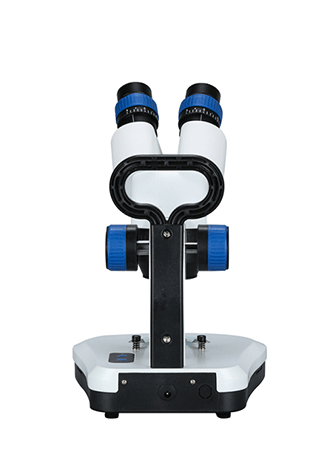
A stereo microscope is different from a basic single-path microscope. According to Evident, stereo microscopes use two optical paths to create a three-dimensional view of solid specimens, making them useful for both industrial inspection and life science work.
In practical terms, this means I can look at a component and get a better feeling for its shape, height, edges, position, and surface condition. That matters when the object is not a flat laboratory slide but a real component that needs to be handled, assembled, repaired, or checked.
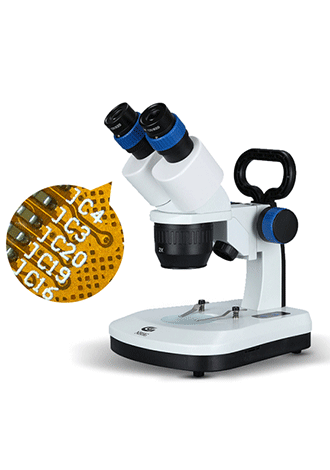
Our 10X Binocular Stereo Microscope is designed around this type of everyday observation. The binocular optical arrangement supports comfortable viewing, while the stereo configuration helps provide depth perception.
This is particularly helpful when checking solder joints, connectors, small mechanical parts, jewelry surfaces, molded components, circuit boards, or other objects where both size and shape matter.
I also pay attention to how the microscope feels during repeated use. A microscope may have good optical specifications on paper, but if focusing is difficult or the operator has to constantly adjust the position of the sample, productivity can suffer. For inspection work, simple operation is often just as important as magnification.
| Observation Requirement | Why Stereo Microscopy Helps | Typical Application |
|---|---|---|
| View small surface details | Provides magnified optical observation | Electronics and precision parts |
| Understand object shape | Two optical paths support stereo viewing | Mechanical components |
| Handle parts during inspection | Practical working space can be maintained depending on configuration | Assembly and repair |
| Inspect reflective objects | Suitable illumination can help reveal surface features | Jewelry and metal parts |
| Perform repeated visual checks | Direct optical viewing supports routine inspection | Quality control |
Source note: The functional description of stereo microscopy is based on information published by Evident on stereo microscopes and their industrial applications. Exact performance depends on the microscope configuration and sample.
The basic principle is quite easy to understand. When I look through a binocular stereo microscope, the optical system provides two viewing paths rather than treating the object as a single flat image. The slightly different views reaching the two eyes help the brain understand depth.
This is one reason a Binocular Optical Microscope can feel more natural during hands-on inspection. I am not only trying to identify a dark spot or a line on a screen. I can look at the shape of a component, follow an edge, check a raised section, or observe how different surfaces meet.
There is another important point: magnification should always be considered together with field of view and working distance. Leica explains that total stereo microscope magnification can depend on the objective, zoom optics, and eyepieces. Leica also notes that increasing magnification generally reduces working distance, which can affect how easily an operator can manipulate a sample.
That is why I do not recommend choosing a microscope by looking at the largest magnification number alone. A good inspection microscope should match the actual size of the component and the level of detail that needs to be checked.
| Optical Factor | What It Means in Daily Work | Why It Matters |
|---|---|---|
| Magnification | How large the observed object appears | Helps reveal small details |
| Field of view | How much of the object can be seen at one time | Important for locating inspection areas |
| Working distance | Space between the objective and the sample | Important when using tools under the microscope |
| Depth of field | How much depth remains acceptably sharp | Useful when inspecting uneven objects |
| Binocular viewing | Observation through both eyes | Supports comfortable direct viewing |
Source note: Optical relationships between magnification, field of view, working distance, and depth of field are summarized from Leica Microsystems' stereo microscope selection guidance. Actual values vary according to the optical configuration.
The 10X configuration provides a practical level of magnification for many routine inspection tasks. It can make small features easier to see while keeping the observation process relatively simple.
For example, when I inspect an electronic component, I may need to see a connector, solder point, housing edge, or small mechanical feature. I do not always need extremely high magnification. What I need is a clear and usable view of the area.
The binocular design allows users to observe through both eyes. For operators who spend a long time inspecting components, this can be more comfortable than relying on a single viewing path.
The viewing experience also feels more natural for objects with three-dimensional features. This is one of the main reasons Binocular Stereo Microscopes remain widely used in assembly, inspection, repair, and laboratory environments.
The stereo optical structure helps users understand the depth and shape of solid objects. This is particularly useful when a component has raised edges, holes, curves, grooves, or different surface levels.
ZEISS lists electronics assembly, PCB inspection, quality inspection, watchmaking, precision work, and component measurement among applications for stereo microscopy.
During inspection, I prefer a focusing system that feels controlled rather than loose or difficult to adjust. Stable focusing helps the operator move between different areas of the sample without unnecessary adjustment.
Our production inspection includes focusing and mechanical operation checks before delivery. This is important because optical quality is only part of the user experience.
The microscope is intended for actual work, not just occasional demonstration. It can be used in workshops, laboratories, schools, repair areas, assembly stations, and quality control departments.
Depending on the final configuration, accessories and illumination can also be selected according to the customer's application requirements.
Electronics is one of the most common areas where I see the value of a stereo microscope. Circuit boards contain many Small Parts packed into a limited space. Visual inspection may involve solder joints, connectors, wires, components, board surfaces, or assembly defects.
A 10X Stereo Microscope can provide a closer view while allowing the operator to understand the overall position of the component. This makes it useful for assembly, rework, repair, and routine inspection.
Leica describes stereo microscopy as useful for PCB inspection and rework, while ZEISS also lists electronics assembly and PCB inspection among industrial Stereo Microscope Applications.
Jewelry requires careful visual inspection because small scratches, surface marks, setting problems, and finishing details can affect the final appearance.
A binocular optical stereo microscope gives the operator a magnified view while maintaining a more natural understanding of the item's shape. This is useful for jewelry inspection, setting work, polishing checks, and other detailed operations.
Small mechanical parts often have edges, grooves, holes, threads, and other features that are difficult to check with the naked eye. A stereo microscope provides a closer view while keeping the component in its real three-dimensional form.
For manufacturers, this can be useful during incoming inspection, assembly, repair, sample checking, and final quality control.
Many medical device components require careful visual checking during assembly and production. Stereo microscopes are used in medical device manufacturing because operators need to see small components clearly while still being able to work on them.
Leica lists medical device manufacturing among stereo Microscope Applications and highlights the importance of accessible working space for tasks such as assembly, gluing, soldering, and rework.
A stereo microscope is also suitable for teaching and laboratory observation. Students can examine insects, plants, materials, small mechanical parts, and other solid specimens without requiring the same preparation used for traditional slide microscopy.
The binocular view is especially useful in teaching because several users can learn how to position, focus, and inspect an object using a simple optical workflow.
Repair technicians often need to identify the exact location of a small problem before taking action. A microscope can help them inspect the part first, choose the right tool, and then perform the repair under magnification.
For product development, the microscope can also be used during prototype inspection. Engineers can compare small design details, check surface conditions, and examine assembled samples.
| Industry | Typical Inspection Task | Value of Stereo Observation |
|---|---|---|
| Electronics | PCB and component inspection | Clear view of small parts and solder areas |
| Jewelry | Surface and setting inspection | Better observation of shape and finish |
| Precision machinery | Small component inspection | Helps identify edges, grooves, and surface details |
| Medical equipment | Component assembly and inspection | Supports detailed visual checking |
| Education | Solid specimen observation | Simple three-dimensional viewing |
| Repair | Fault finding and rework | Closer view during manual operations |
| Quality control | Appearance and assembly checks | Supports repeatable visual inspection |
Source note: Application examples are consistent with application information published by Evident, Leica Microsystems, and ZEISS for stereo microscopy and optical inspection. The suitable application depends on the actual sample and microscope configuration.
I believe a microscope should be checked as a complete working instrument rather than judged only by the appearance of the optical head. That is why our production process includes several practical inspection steps.
Before production, we confirm the microscope model, optical configuration, accessories, power requirements where applicable, packaging requirements, and customer-specific options.
This step sounds simple, but it prevents many problems later. A microscope ordered for education may have different accessory requirements from one intended for jewelry inspection or industrial assembly.
During assembly, optical components and mechanical parts are installed according to the required configuration. We pay attention to the movement of the focusing mechanism and the overall stability of the microscope.
For a binocular stereo microscope, the viewing system must also be correctly assembled so that the operator can use the two optical paths comfortably.
After assembly, we check focusing operation, mechanical movement, optical performance, accessories, appearance, and overall assembly quality.
I do not treat this as a final formality. A microscope is a precision instrument, and small assembly problems can become annoying when the product is used every day.
Before shipment, we confirm that the agreed microscope configuration and accessories are complete. User documents and applicable inspection or certification documents are also prepared according to the order.
The microscope is then protected with cushioning and dust-proof materials, placed in an individual box, and packed into reinforced export cartons. This packaging approach is intended to reduce transportation risks during international delivery.
Our company has experience serving overseas customers, and our products are exported to more than 20 countries and regions, including America, Brazil, Germany, the Netherlands, and Japan.
One question buyers often ask is: “How long will the microscope take?” The honest answer is that it depends on the exact configuration.
For a standard model, the production arrangement can usually be simpler. A customized order may take longer because we need to confirm optical components, accessories, quantity, special requirements, and other details before production.
| Order Type | Main Factors Affecting Lead Time | Typical Production Situation |
|---|---|---|
| Standard model | Model, quantity, component availability | Usually easier to arrange |
| Customized configuration | Optics, accessories, special requirements | May require additional preparation |
| Large quantity order | Quantity, production scheduling, components | Requires production planning |
| Sample or evaluation order | Model and requested configuration | Subject to product availability |
For this reason, I recommend that buyers provide the intended application, required magnification, number of units, destination country, and any accessory requirements when asking for a quotation. This gives us enough information to prepare a more useful proposal.
The delivery package normally includes the agreed microscope configuration, required accessories, user documents, and applicable inspection or certification documents according to the order.
Payment terms are arranged according to the specific order agreement. For many international orders, a deposit is arranged before production and the balance is paid before shipment. The exact terms should be confirmed with the sales team before the order is placed.
We can arrange transportation according to destination and delivery requirements. Air freight, sea freight, express delivery, and other suitable logistics methods can be considered.
Optical instruments need careful packaging because transportation can involve vibration, handling, temperature changes, and long-distance movement. We use cushioning and dust-proof protection, individual boxes, and reinforced export cartons to provide several layers of protection.
When I look at an optical instrument supplier, I do not only look at the product photograph. I also want to know whether the company understands optics, production, inspection, customization, packaging, and after-sales communication.
Ningbo Huaguang Precision Instrument Co., Ltd. is located in Haishu District, Ningbo. Our main business covers educational microscopes, industrial inspection microscopes, professional jewelry inspection microscopes, optical components, and precision injection molding.
We have developed products for customers in different markets, and our products are exported to more than 20 countries and regions. This international experience helps us understand that buyers in different markets can have different requirements for configuration, packaging, documentation, and delivery.
Our product range covers several Microscope Application areas. This gives us a practical understanding of how microscopes are used in education, industrial inspection, jewelry work, and other environments.
Our company has been certified to the ISO9001 quality management system, while our supplied product information states that products have CE and RoHS certifications. The exact certificate and applicable scope should always be confirmed against the specific model and order.
Our company credo is “Nothing is perfect only better and better.” I see this as a practical working idea rather than just a sentence. Optical products can always be improved through better design, more careful assembly, clearer instructions, better packaging, and closer communication with users.
A microscope is usually used for a long time, so the relationship should not end when the carton leaves the factory. We aim to provide clear product information and practical after-sales support so customers can understand the configuration and use the instrument correctly.
For customers comparing different Optical Stereo Microscope suppliers, I recommend looking at the complete picture: optical configuration, mechanical stability, application experience, inspection process, documentation, packaging, communication, and after-sales support.
A 10X Binocular Stereo Microscope is a stereo optical microscope designed for binocular observation at a specified 10X magnification configuration. It is suitable for observing solid objects, small components, surface details, and three-dimensional features.
A stereo microscope uses two optical paths to create a three-dimensional view of solid objects. A standard compound microscope is generally designed for higher-magnification observation of prepared specimens. The better choice depends on the sample and inspection task.
Yes. Stereo microscopes are widely used in electronics assembly and PCB inspection. A 10X configuration can be useful for examining components, solder areas, connectors, and other visible details. The exact suitability depends on component size and the detail level required.
Yes. Jewelry inspection is a common application for stereo microscopy. The binocular view and three-dimensional observation are useful when checking surface finish, setting details, edges, small marks, and other visible features.
Binocular viewing allows the operator to use both eyes and can provide a more comfortable observation experience. The two optical paths also support the three-dimensional viewing that is characteristic of stereo microscopy.
No. Higher magnification is not automatically better. As magnification increases, the field of view and working distance can change. Leica notes that working distance generally decreases as magnification increases. The correct magnification should therefore match the size of the object and the inspection task.
I recommend checking the required magnification, field of view, working distance, optical configuration, focusing method, illumination, stand type, accessories, sample size, and intended application. For industrial use, it is also worth considering how much space is available for tools and manual operation around the sample.
The production cycle depends on the microscope model, optical configuration, accessories, order quantity, component availability, and customization requirements. Standard configurations are generally easier to arrange, while customized orders may require additional production time.
We use cushioning and dust-proof protection, an individual box, and reinforced export cartons. The purpose is to reduce the risk of damage caused by vibration and handling during international transportation.
Delivery normally includes the agreed microscope configuration, accessories, user documents, and applicable inspection or certification documents according to the order. Specific documentation should be confirmed before shipment.
A good microscope does not need to be complicated to be useful. For many inspection tasks, what matters is a clear image, practical magnification, comfortable binocular viewing, stable focusing, and enough working space to handle the sample.
Our 10X Binocular Stereo Microscope Optical Stereo Microscope is designed around these practical needs. It can support electronics inspection, jewelry work, precision machinery, medical equipment manufacturing, education, laboratories, repair, product development, and quality control.
From our side, we focus not only on optical assembly but also on product inspection, accessory confirmation, packaging, international delivery, and after-sales communication. We understand that an overseas buyer is purchasing more than a microscope. You are also purchasing production support and a reliable supply process.
If you are looking for a 10X Binocular Microscope, 10X Stereo Microscope, Binocular Optical Microscope, or practical Optical Stereo Microscope for industrial inspection, education, jewelry, electronics, or laboratory use, we can review your application and recommend a suitable configuration based on the actual sample and working conditions.
Instead of simply choosing the microscope with the biggest specification, I recommend starting with one simple question: What exactly do you need to see and what work needs to be done under the microscope? Once that is clear, choosing the right optical system becomes much easier.
Add: No.70 Zhenxing East Road, Zhangshui Town,Haishu District,Ningbo City,Zhejiang,China
Contact Person: Mr. Xu Contact Number:+86 13777211956
Tel:+86 574-88152588/574-88152566
Fax:+86 574-88152570
Post Code:315161
E-mail:chinahg@hgopt.com

This website uses cookies to ensure you get the best experience on our website.
 中文
中文


 WhatsApp
 Phone
Phone E-mail
 Message