


WF10x/20mm Electronic Microscope Binocular Head Microscope for Precision Inspection and Education
When I choose a microscope for electronic inspection, I do not look at the magnification number alone. In real work, I care about whether I can see a small component clearly, whether both eyes can observe comfortably, whether focusing feels stable, and whether there is enough working space to handle the sample. These details make a bigger difference than a long list of technical terms.
Our WF10x/20mm Electronic Microscope Binocular Head Microscope is designed around these practical needs. It combines a binocular observation head with a Stereo Microscope structure and a WF10x/20mm eyepiece configuration. The system is intended for clear observation of Small Parts, electronic components, surface details, and three-dimensional structures.
At Ningbo Huaguang Precision Instrument Co., Ltd., I work with microscope products for educational, Industrial Inspection, Jewelry Inspection, laboratory, repair, and quality-control applications. We also manufacture optical components and carry out precision injection molding. Our products have been exported to more than 20 countries and regions, including America, Brazil, Germany, the Netherlands, and Japan.
One point I always explain to customers is that “WF10x/20mm” should not be understood as the total magnification of the entire microscope. In microscope terminology, the 10x generally refers to the eyepiece magnification, while 20 mm refers to the field number of the eyepiece. The final visual magnification depends on the complete optical configuration, including the objective and any zoom system.
That distinction matters when selecting an electronic inspection microscope. A microscope that looks impressive on paper may not be comfortable for the actual sample. I prefer to start with the object being inspected and then match the optical configuration to the job.
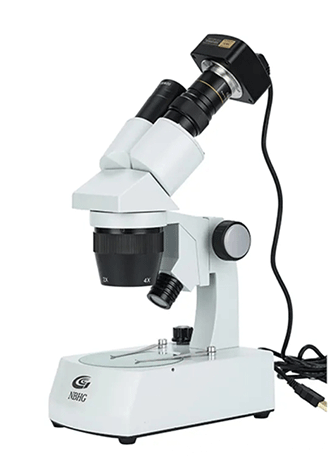
Let me put the name into simple words.
WF10x/20mm refers to a wide-field eyepiece configuration. The “10x” represents the eyepiece magnification, while “20mm” is the field number. The binocular head means the microscope provides two viewing paths, allowing the operator to use both eyes. The stereo microscope structure is designed to provide a three-dimensional view of solid objects.
That combination makes the microscope practical for tasks where the user needs to see not only whether something is there, but also where it is and how its surfaces relate to each other.
Evident Scientific explains that a stereo microscope uses two optical paths to create a three-dimensional view of solid specimens and lists electronics, metals, assembly, and quality control among its industrial applications. :contentReference[oaicite:0]{index=0}
For example, when I inspect a small electronic connector, I may need to look at the pins, plastic housing, metal contacts, edges, and height differences at the same time. A stereo viewing system helps me understand these structures more naturally.
The same idea applies to jewelry. A ring, setting, chain, or small decorative part is not a flat object. I may need to inspect a curved surface, a small groove, an edge, or the position of a stone. A Binocular Stereo Microscope gives the operator a useful sense of depth while inspecting the object.
The main parts of this type of microscope can be understood as follows:
Binocular observation head: provides two-eye viewing and supports comfortable observation.
WF10x/20mm eyepiece: provides 10x eyepiece magnification with a 20 mm field number.
Objective system: determines an important part of the final optical magnification and working distance.
Focusing mechanism: allows the operator to adjust image sharpness.
Stand and mechanical structure: supports the microscope and sample during inspection.
Illumination system: provides light so the operator can see surface details more clearly.
The actual performance depends on how these parts work together. This is why I avoid describing the WF10x/20mm specification as a complete magnification specification. It is one part of the optical system, not the entire system.
This is a common question from buyers who are new to microscope specifications.
The 20 mm normally refers to the field number of the eyepiece. The field number helps describe the size of the visible field in combination with the optical system. A larger field of view can make it easier to locate and orient a sample.
Leica Microsystems explains that the field of view depends on the total optical magnification and eyepiece field number, while total magnification is determined by combining the objective, zoom system, and eyepiece magnifications. :contentReference[oaicite:1]{index=1}
So when I discuss a WF10x/20mm Binocular Microscope with a customer, I normally ask what they need to observe rather than simply saying “10x is enough.” The complete optical configuration has to match the application.
| Specification Term | Simple Meaning | Why It Matters |
|---|---|---|
| WF | Wide-field eyepiece designation | Describes the eyepiece viewing field |
| 10x | Eyepiece magnification | Contributes to total microscope magnification |
| 20 mm | Eyepiece field number | Relates to the available viewing field |
| Binocular Head | Two-eye observation | Supports comfortable visual inspection |
| Stereo Microscope | Two optical viewing paths | Provides three-dimensional observation |
Source: Leica Microsystems explains the relationship between eyepiece magnification, field number, objective magnification, zoom magnification, and total magnification in stereo microscope selection. :contentReference[oaicite:2]{index=2}
The basic working principle is quite easy to understand.
When light reaches the sample, the microscope collects the reflected light through its optical system. The light is separated into two viewing paths. One path reaches the left eye and the other reaches the right eye. Because the two images contain slightly different visual information, the brain combines them and creates a sense of depth.
Leica Microsystems describes this depth perception effect in binocular stereo observation as being related to the difference between the images reaching the two eyes. :contentReference[oaicite:3]{index=3}
This is especially useful for solid objects. If I am looking at a flat printed image, I mainly need to identify patterns and colors. But if I am inspecting a connector, machined component, jewelry setting, or small assembly, I need to understand height, edges, holes, curves, and surface position.
That is where a WF10x/20mm Binocular Head Microscope becomes practical.
The eyepiece is the part I look through. A WF10x/20mm eyepiece provides 10x magnification and a 20 mm field number according to the stated configuration.
However, the total magnification is not simply 10x. If the microscope has an objective or zoom system, those values also contribute to the final visual magnification.
Leica's technical guidance gives the basic relationship as objective magnification multiplied by zoom magnification and eyepiece magnification. :contentReference[oaicite:4]{index=4}
For example, if a system uses a 1x objective, a 1x zoom setting, and a 10x eyepiece, the visual magnification would be 10x. If the optical configuration changes, the final magnification changes as well.
This is why I recommend customers ask for the complete optical specification rather than judging a microscope from the eyepiece marking alone.
Working distance is another specification that I consider very important.
It is the distance between the front of the objective and the top of the sample when the sample is in focus. Leica explains that working distance affects how easily an operator can handle a sample under the objective. :contentReference[oaicite:5]{index=5}
For electronics work, this can be a big deal. If I need to use tweezers, a soldering tool, or another small hand tool while observing the component, I need enough room between the objective and the sample.
Leica's industrial A60 stereo microscope, for example, is designed around inspection and rework tasks and provides a working distance of up to 122 mm in its specified configuration. This is an example of how manufacturers design working space around practical inspection tasks. :contentReference[oaicite:6]{index=6}
The exact working distance of our microscope depends on the selected objective and optical configuration. I therefore recommend confirming the actual working distance before placing an order.
The first feature is the binocular head itself.
When I inspect small components for a long period, using both eyes feels much more natural than repeatedly viewing through a single optical path. The operator can adjust the viewing position to suit personal needs, depending on the microscope design.
Commercial stereo microscope systems commonly provide adjustable interpupillary distance. For example, Evident lists a 52–76 mm interpupillary adjustment range on its SZ61/SZ51 binocular configurations. :contentReference[oaicite:7]{index=7}
I mention this example not as a specification for our product, but to show why binocular adjustment is an important part of microscope ergonomics.
The WF10x/20mm configuration gives the microscope a practical eyepiece specification for observation work. The 10x eyepiece magnification is widely used in optical microscope systems, while the 20 mm field number gives a clear reference for the eyepiece viewing field.
When selecting the final system, I would still match the eyepiece with the objective, zoom range, working distance, and sample size.
Focusing sounds simple until you have to do it several hundred times in one shift.
A stable focusing mechanism allows the operator to move smoothly between samples and bring the required area into focus without unnecessary movement. For quality inspection, this can make the workflow much easier.
Our product information specifically focuses on stable focusing and comfortable inspection. Before shipment, we check the focusing operation as part of the overall product inspection.
The stereo optical structure is useful when the sample has depth.
I can use it to observe edges, surface changes, holes, small raised sections, recessed areas, and other three-dimensional features. This is one reason stereo microscopes are common in electronics, assembly, repair, and inspection work.
Evident lists electronics, metals, assembly, and quality control inspection among applications for stereo microscopes. :contentReference[oaicite:8]{index=8}
A good inspection microscope should not make the operator feel trapped underneath the optics.
The sample may need to be rotated, moved, cleaned, adjusted, repaired, or held with a tool. That is why working distance and stand design are important. They determine how much room the operator has around the sample.
For a laboratory or classroom, observation may last only a short time. In a production environment, however, an operator may use the microscope repeatedly throughout the day.
This is why I consider binocular observation, focusing smoothness, viewing position, illumination, and sample access together. A microscope should be comfortable enough to use repeatedly, not simply impressive during a five-minute demonstration.
The phrase Electronic Microscope Binocular Head may sound very specialized, but the actual use is straightforward: the microscope helps the operator see small electronic and mechanical details more clearly while working with both eyes.
For electronics, I commonly think about five inspection tasks:
Finding small components and locating their position.
Checking solder joints and connection areas.
Inspecting pins, terminals, connectors, and wires.
Looking for scratches, cracks, contamination, or surface defects.
Supporting repair and rework operations.
The microscope can also be useful before assembly. An operator may inspect a component before installing it. After assembly, the same microscope can be used to check the finished connection.
This is one of the most important points in microscope selection.
If I increase magnification, the object appears larger, but the visible area usually becomes smaller. That means I may see more detail but lose some overall orientation.
Leica explains that field of view and total magnification are closely related, and that a larger field can help users maintain better orientation on a sample. :contentReference[oaicite:9]{index=9}
So for a technician who first needs to find a component and then inspect a small area, a flexible optical system can be more useful than a fixed high magnification.
| Inspection Requirement | What the Operator Usually Needs | Practical Optical Consideration |
|---|---|---|
| Locate a component | See a larger area | Useful field of view |
| Inspect a small solder point | See fine details | Appropriate magnification |
| Repair a component | See while using tools | Useful working distance |
| Inspect uneven surfaces | Maintain focus across height changes | Suitable depth of field |
| Repeated production inspection | Work comfortably for longer periods | Binocular and ergonomic design |
Source: The practical relationships between field of view, magnification, working distance, depth of field, and stereo microscope usability are summarized by Leica Microsystems. :contentReference[oaicite:10]{index=10}
Depth of field describes how much height variation in the sample can appear acceptably focused.
This becomes important when the sample is not perfectly flat. A connector, soldered assembly, jewelry setting, or machined part may have several height levels.
Leica explains that depth of field is related to numerical aperture, magnification, and resolution, and that stereo microscope observation can provide enhanced depth perception through binocular viewing. :contentReference[oaicite:11]{index=11}
In simple language, I would say it this way: if the sample has different heights, the microscope needs to give the operator enough visual information to understand those surfaces without constantly changing focus.
For repair work, working distance becomes even more important.
If a technician needs to hold tweezers or another tool between the microscope and the sample, a very short working distance can make the job awkward. A suitable working distance provides more room for the operator's hands.
Leica specifically describes working distance as an important factor for inspection and rework, because it determines how much room there is to maneuver the sample. :contentReference[oaicite:12]{index=12}
This is one of the most natural applications for the WF10x/20mm Electronic Microscope Binocular Head Microscope.
Electronic components are getting smaller, while inspection requirements remain strict. Operators need to check components without removing them from the working process.
A stereo microscope can support inspection of PCBs, connectors, terminals, solder joints, wires, small components, and assembly details.
For repair work, the operator can look through the binocular head while handling the component with small tools. This is much more practical than repeatedly switching between the naked eye and a magnified image.
Jewelry requires a different type of observation.
When I inspect jewelry, I may need to look at the setting around a stone, the edge of a metal surface, a small scratch, a decorative pattern, or the condition of a connection point.
Because these objects are three-dimensional, stereo observation is useful. It gives the operator a more natural sense of shape and position.
Small mechanical components can have grooves, threads, holes, edges, and other details that are difficult to inspect with the naked eye.
A binocular stereo microscope for precision inspection can help an operator check these details during incoming inspection, production inspection, assembly, repair, or final quality control.
Our supplied application information includes medical equipment among potential inspection fields. Here I would make an important distinction: a Microscope Used to inspect a medical device component is not automatically a medical device itself.
The microscope can be used as an inspection tool during manufacturing or quality control. The exact requirements depend on the customer's process, product, and regulatory environment.
Educational microscopes benefit from straightforward operation.
Students can observe small objects, structures, materials, and components with both eyes. The stereo image also makes solid objects easier to understand because the student can see their shape instead of only seeing a flat magnified picture.
Laboratory users may need to inspect samples, small structures, components, or materials without complex sample preparation.
A stereo microscope is particularly convenient when the sample is relatively large or three-dimensional compared with what would normally be placed under a high-power compound microscope.
Repair technicians often need both observation and hand movement at the same time.
That makes the combination of binocular observation, stereo viewing, suitable working distance, and stable focusing particularly useful.
When I explain our manufacturing process, I do not want to make it sound more complicated than it is. The goal is to build a microscope in which the optical parts, mechanical parts, accessories, and packaging all work together properly.
Optical components are the heart of a microscope. They need to be handled carefully and assembled according to the intended optical configuration.
During assembly, cleanliness is important because dust or contamination can affect the viewing experience. The optical components also need to be positioned correctly within the system.
The binocular head, focusing mechanism, stand, objective connection, and other mechanical components are assembled into the complete microscope system.
I pay particular attention to focusing because this is one of the functions the operator uses constantly. The movement should be controlled and stable rather than loose or unpredictable.
Before shipment, we check optical performance. This allows us to identify problems that may not be obvious from the external appearance of the microscope.
We also check focusing, mechanical operation, accessories, appearance, and overall assembly quality.
B2B microscope orders can include different accessories and optical configurations. Before delivery, we confirm that the actual product matches the agreed configuration.
This is particularly important for customers ordering multiple units. A clear configuration record helps reduce misunderstandings between purchasing, production, inspection, and logistics.
| Quality Check | What We Examine | Reason |
|---|---|---|
| Optical Performance | Viewing quality and optical condition | Support clear observation |
| Focusing | Focusing operation and stability | Support repeated inspection |
| Mechanical Operation | Head, stand and moving parts | Support stable use |
| Accessories | Specified accessories and configuration | Match customer order |
| Appearance | External condition and assembly | Identify visible problems |
| Packaging | Cushioning, inner box and export carton | Reduce transportation risk |
Source: The inspection stages listed here are based on Ningbo Huaguang Precision Instrument Co., Ltd.'s supplied product and delivery process. ISO 9001 provides a general framework for controlled processes, performance evaluation, customer requirements, and continual improvement. :contentReference[oaicite:13]{index=13}
Ningbo Huaguang Precision Instrument Co., Ltd. has an ISO 9001 quality management system certification.
As of September 2026, ISO has published the new ISO 9001:2026 edition. ISO describes the standard as a framework for establishing, implementing, maintaining, and continually improving a quality management system. :contentReference[oaicite:14]{index=14}
I mention this because certification should be explained accurately. ISO 9001 is not a statement that every individual product is automatically perfect. It concerns the organization's quality management system and the processes used to consistently meet requirements and improve performance.
Our products are also supplied with CE and RoHS certifications according to applicable product requirements. The European Commission describes RoHS as EU rules restricting certain hazardous substances in electrical and electronic equipment and currently lists ten restricted substances under the directive. :contentReference[oaicite:15]{index=15}
For an international microscope manufacturer, I consider packaging part of the product.
A microscope contains optical and mechanical components. During transportation, vibration and impact can occur. The purpose of good packaging is to keep the microscope stable and protected until it reaches the customer's facility.
Our packaging process uses cushioning and dust-proof materials. Each microscope is placed in an individual box and then packed into reinforced export cartons.
The final delivery normally includes the agreed microscope configuration, accessories, user documents, and applicable inspection or certification documents.
The production cycle depends on several factors:
Microscope model
Optical configuration
Eyepiece and objective selection
Accessories
Order quantity
Customization requirements
Standard models can usually be arranged faster. Customized orders may need additional time because the production and inspection process has to follow the agreed specifications.
Payment is arranged according to the order agreement. A common B2B arrangement is a deposit followed by the balance before shipment. The exact terms should always be confirmed in the quotation or sales contract.
Depending on the destination and delivery requirements, we can arrange transportation by air freight, sea freight, express delivery, or another suitable logistics method.
For smaller urgent orders, express or air transportation may make sense. For larger orders, sea freight may be more practical. The right choice depends on quantity, destination, required delivery time, and logistics cost.
Before placing an order for a WF10x/20mm Electronic Microscope Binocular Head Microscope, I recommend confirming:
Sample type and sample size
Smallest detail that must be observed
Required total magnification
WF10x/20mm eyepiece configuration
Objective configuration
Working distance
Illumination requirements
Stand requirements
Required accessories
Quantity
Destination country
Required certifications or documents
This information helps us recommend a configuration based on the actual application instead of simply matching a product name.
Our company is located in Haishu District, Ningbo, a city with convenient transportation and a strong manufacturing environment.
Our main business covers educational microscopes, industrial inspection microscopes, professional jewelry inspection microscopes, optical components, and precision injection molding. This combination gives us experience in both optical products and precision manufacturing.
Our products are exported to more than 20 countries and regions, including America, Brazil, Germany, the Netherlands, and Japan. For me, international business is not only about shipping a product overseas. It is also about understanding different customer requirements, documentation needs, packaging expectations, and application conditions.
Our company has an ISO 9001 quality management system certification, and our products have CE and RoHS certifications according to applicable requirements.
We also have experience developing different series of nanometer photocatalytic air purification and air conditioning purification equipment. This reflects our broader focus on technical development and precision products.
Our company credo is “Nothing is perfect only better and better.”
I like this sentence because it reflects how I view microscope manufacturing. Even when a microscope already works well, there are still details worth improving: optical clarity, focusing feel, mechanical stability, production consistency, packaging, documentation, and customer service.
For B2B buyers, I believe another important point is communication before production. If you tell us that you need a microscope for PCB inspection, jewelry inspection, laboratory work, student training, or repair, we can discuss the appropriate configuration instead of treating every application as the same.
That is especially important when sourcing an electronic microscope binocular head or WF10x/20mm Binocular Stereo Microscope. The same eyepiece can be used in different systems, but the final inspection experience depends on the complete optical and mechanical configuration.
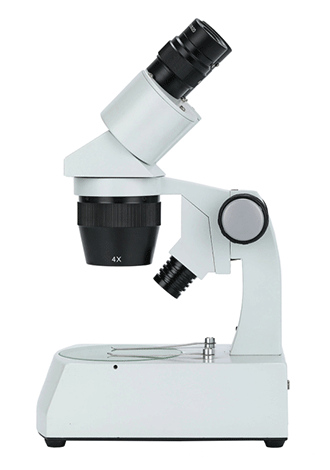
WF10x/20mm generally identifies the eyepiece as a wide-field 10x eyepiece with a 20 mm field number. It does not by itself describe the total magnification of the complete microscope. Total visual magnification depends on the objective, zoom system if present, and eyepiece.
No. The 10x is the eyepiece magnification. The complete microscope magnification must be calculated from the objective, zoom optics, and eyepiece. Leica provides this relationship in its stereo microscope selection guidance. :contentReference[oaicite:16]{index=16}
A binocular head allows the operator to observe through both eyes. This supports natural viewing and can be more comfortable for repeated inspection. Binocular stereo observation also supports depth perception because each eye receives a slightly different view of the object. :contentReference[oaicite:17]{index=17}
Yes. A stereo microscope is well suited to electronics assembly, inspection, repair, and quality control. Typical tasks can include checking solder joints, connectors, pins, wires, component placement, and surface defects.
Yes. The binocular stereo viewing method is useful for observing jewelry settings, small decorative details, metal edges, surfaces, and other three-dimensional structures.
Working distance determines the space between the objective and the sample when the sample is in focus. More working space can make it easier to handle a component with tweezers or other tools while viewing it through the microscope. :contentReference[oaicite:18]{index=18}
No. Higher magnification gives a larger image, but the visible field generally becomes smaller. Depending on the job, the operator may also need sufficient working distance and depth of field. The best configuration is the one that matches the sample and inspection task.
A stereo microscope is designed mainly for viewing solid objects with a three-dimensional impression and generally works at lower magnifications. Compound microscopes are designed for much higher magnification of prepared or thin specimens. For electronics assembly, jewelry inspection, repair, and many mechanical inspection tasks, stereo microscopy is often more practical.
Depending on the model, customization may be possible for optical configuration, accessories, stand, and other requirements. The exact options should be confirmed before production because customized configurations can affect the production schedule.
The production cycle depends on the microscope model, optical configuration, accessories, order quantity, and customization requirements. Standard models can normally be arranged more quickly, while customized orders may require additional production time.
We check optical performance, focusing, mechanical operation, accessories, appearance, and overall assembly quality before delivery. We also confirm the agreed configuration and prepare the applicable documents.
Each microscope is protected with cushioning and dust-proof materials, packed in an individual box, and then placed into reinforced export cartons. This helps reduce transportation risks during international shipping.
Our company has an ISO 9001 quality management system certification. Our products have CE and RoHS certifications according to applicable product requirements. For a specific order, the exact certification and documentation should be confirmed according to the selected model and market.
After working with microscope products, I have learned that choosing the right model is usually easier when we start with the sample instead of starting with the biggest magnification number.
The WF10x/20mm Electronic Microscope Binocular Head Microscope combines a WF10x/20mm eyepiece configuration, binocular observation, stereo viewing, focusing stability, and practical inspection capability. It can be used for electronics assembly, PCB inspection, jewelry inspection, precision machinery, laboratories, education, repair, and quality control.
The WF10x/20mm specification gives the buyer an important optical reference, but it should always be considered together with the objective, total magnification, field of view, working distance, depth of field, illumination, and stand.
For electronics inspection, I would pay particular attention to the balance between magnification and working space. For jewelry, I would focus more on three-dimensional observation, surface details, and comfortable handling. For education, simple operation and comfortable binocular viewing may be more important. For production inspection, focusing stability and operator comfort can become major factors because the microscope may be used repeatedly every day.
At Ningbo Huaguang Precision Instrument Co., Ltd., we approach microscope production from this practical side. We manufacture educational and industrial inspection microscopes, professional jewelry inspection microscopes, optical components, and precision injection molded products. We inspect the optical and mechanical condition before delivery and prepare the microscope according to the agreed configuration.
Our products have reached customers in more than 20 countries and regions, and our quality management system and applicable product certifications provide a structured basis for international B2B cooperation.
Most importantly, we continue to follow our simple company credo: “Nothing is perfect only better and better.”
If you are looking for a WF10x/20mm binocular head microscope, electronic stereo microscope, binocular stereo microscope for electronics inspection, or WF10x/20mm electronic inspection microscope, I recommend starting with your actual sample and inspection task. Once those requirements are clear, selecting the right optical configuration becomes much more straightforward.
Add: No.70 Zhenxing East Road, Zhangshui Town,Haishu District,Ningbo City,Zhejiang,China
Contact Person: Mr. Xu Contact Number:+86 13777211956
Tel:+86 574-88152588/574-88152566
Fax:+86 574-88152570
Post Code:315161
E-mail:chinahg@hgopt.com

This website uses cookies to ensure you get the best experience on our website.
 中文
中文


 WhatsApp
 Phone
Phone E-mail
 Message