

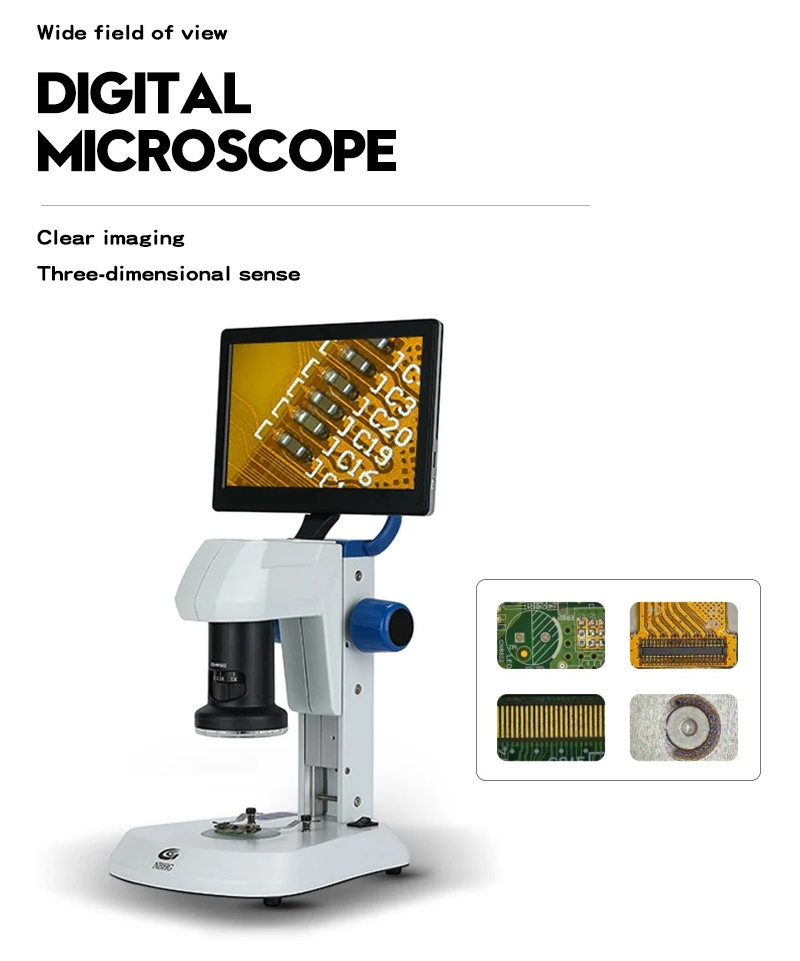
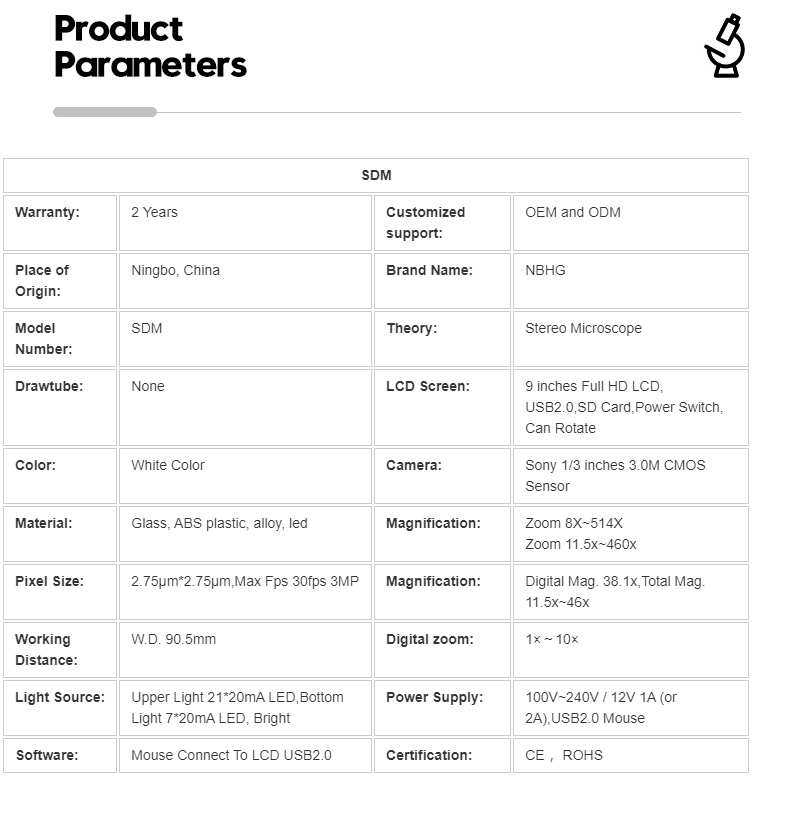
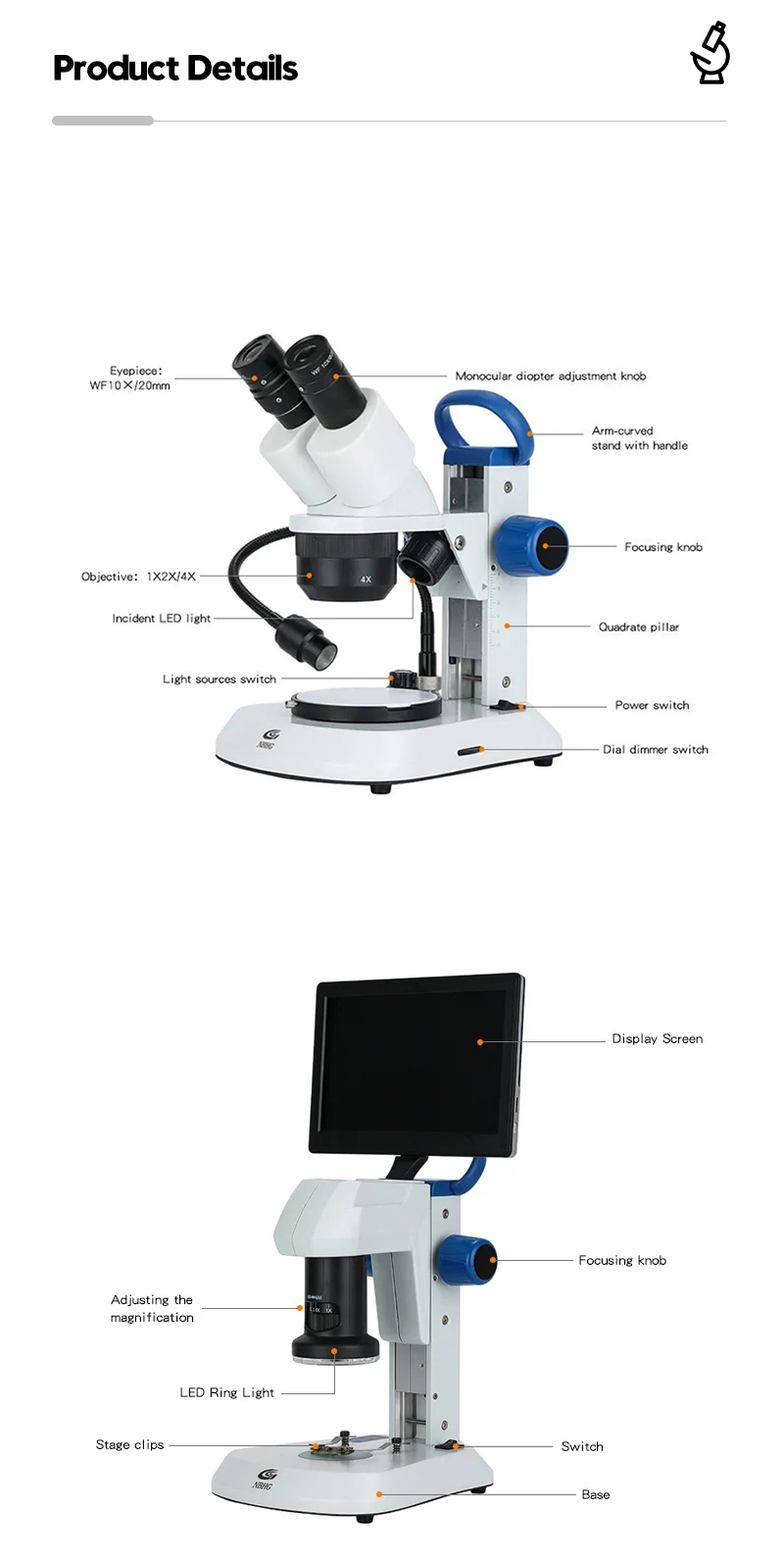
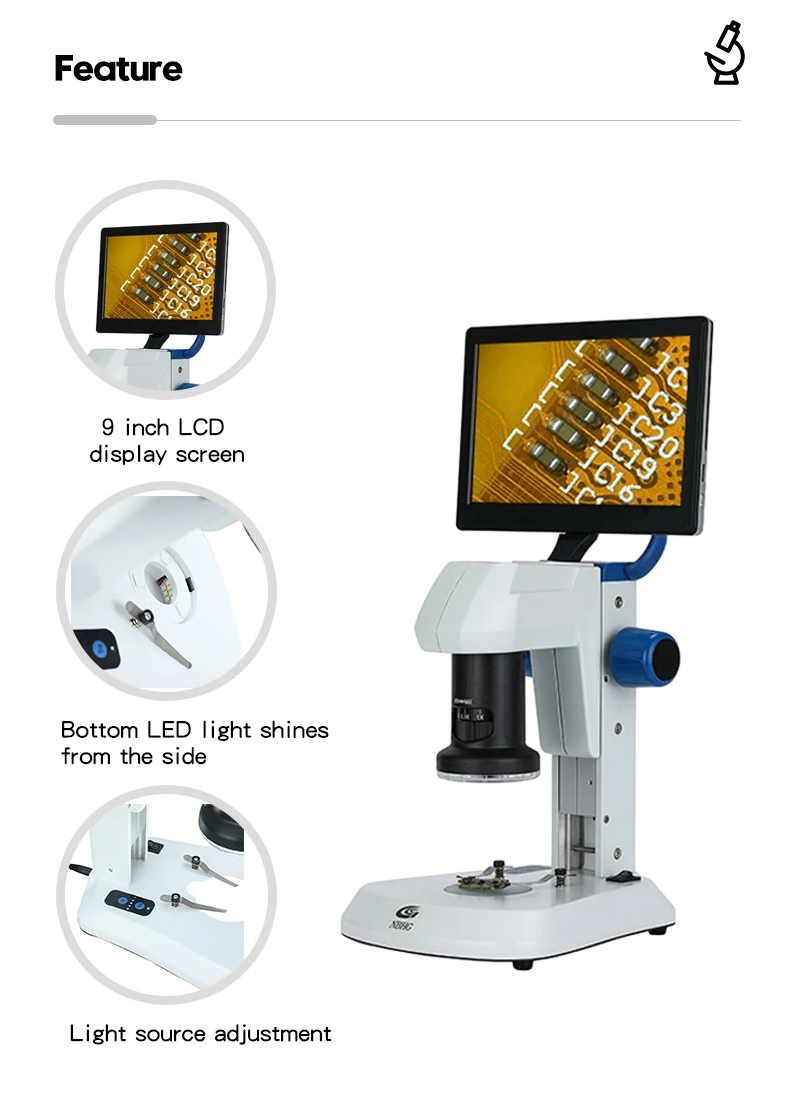
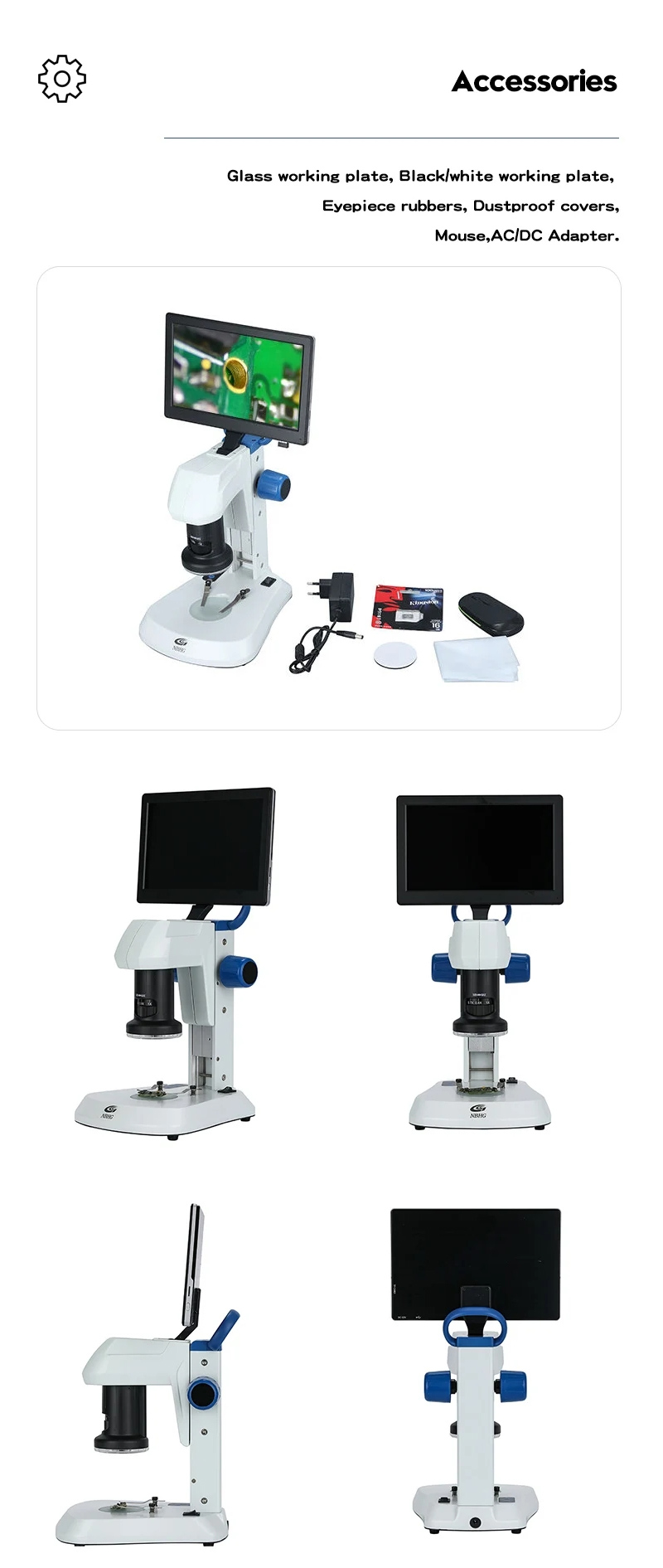
Low Magnification TV Digital Microscope for Clear Inspection and Digital Observation
When we talk about Microscope inspection with our customers, one question comes up again and again: do you really need very high magnification for the job? In many cases, the answer is no. If the object is relatively large and the user needs to see a wider area while still checking small surface details, a Low Magnification TV Digital Microscope can be a much more practical choice.
Our Low Magnification TV Digital Microscope is designed around this simple working idea. It combines optical magnification with a digital camera and TV display system, allowing the operator to observe an enlarged image on a screen instead of depending only on direct eyepiece viewing. The lower magnification range makes it easier to see a larger portion of the sample at one time.
At Ningbo Huaguang Precision Instrument Co., Ltd., we work with educational microscopes, Industrial Inspection microscopes, professional Jewelry Inspection microscopes, optical components, and precision injection molding. We develop our products with actual working conditions in mind. For us, a microscope should not just look technical on a specification sheet. It should be comfortable enough to use, simple enough to understand, and stable enough for repeated inspection.
This product is especially suitable when the inspection target is larger than the tiny samples normally associated with high-power microscopy. Electronics, mechanical parts, jewelry, surface inspection, education, laboratories, repair work, and quality control are some of the areas where low magnification digital observation can be useful.
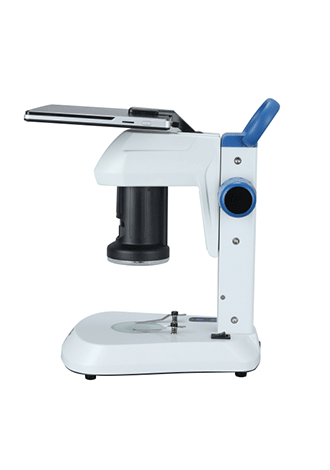
A Low Magnification TV Digital Microscope is a microscope system designed to provide enlarged digital images at relatively low magnification. Instead of forcing the user to examine every object through a small eyepiece, the camera captures the optical image and sends it to a TV or compatible display.
The phrase “low magnification” is important here. It does not mean that the microscope cannot show details. It means that the optical system is arranged to provide a broader field of view compared with a high-magnification microscope. In simple terms, the user can see more of the object at one time.
That can be very helpful during inspection. Imagine checking a mechanical component with a small surface defect. If the microscope magnifies too much, the operator may see the defect clearly but lose sight of where the defect sits on the whole part. With lower magnification, it is easier to understand the position of the target first and then move closer when necessary.
Our Low Magnification Digital Microscope is therefore aimed at practical observation rather than extreme magnification. It is a useful option for users who need a clear enlarged image while keeping a relatively broad view of the inspection area.
The TV display is another important part of the system. The image can be viewed on a larger screen, making it easier for the operator to work in a natural position. It can also be helpful when two or more people need to look at the same inspection result.
| Microscope Type | Typical Viewing Method | General Inspection Character |
|---|---|---|
| Traditional optical microscope | Direct eyepiece viewing | Direct optical observation |
| Digital microscope | Camera and digital display | Screen-based observation and possible image recording |
| Low magnification digital microscope | Camera with broad digital viewing area | Useful when the operator needs to see more of the object |
| TV digital microscope | Camera connected to TV/display | Convenient shared viewing and inspection |
Source: This comparison describes common microscope operating principles and digital microscopy workflows. Actual viewing performance depends on the optical system, camera, display, illumination, and inspected object.
The working principle is actually quite easy to understand. Light is directed toward the inspection object. The optical system collects the reflected light and forms an enlarged image. A digital camera captures that image, and the resulting signal is sent to the display.
From the operator's point of view, the process is simple. Place the object under the microscope, adjust the working position, switch on the suitable illumination, and observe the image on the screen. The focus can then be adjusted until the required area becomes clear.
Because the microscope uses lower magnification, the operator can normally start with a wider view. This makes positioning easier. When inspecting a component with several areas of interest, the operator does not have to constantly lose the whole picture while looking at one small section.
This is one reason we see value in low magnification microscopy for production environments. Inspection is not always about finding the tiniest possible detail. Sometimes the important thing is to understand the complete surface, find a target quickly, and then inspect the relevant area carefully.
The digital camera also changes the working experience. Instead of keeping the eye at a fixed eyepiece position, the operator can look at the screen. This can be more convenient during longer inspection sessions, especially when several people need to discuss the same sample.
For education and training, the screen-based design can be even more useful. A teacher can place a sample under the microscope and let several students observe the same enlarged image. A supervisor can also demonstrate an inspection method to a new operator without asking everyone to take turns using an eyepiece.
There is a common misunderstanding that more magnification always means a better microscope. From our experience, that is not how inspection works.
Higher magnification is useful when the target is extremely small. But magnification also changes the field of view. When the image becomes larger, the visible area usually becomes smaller. For many industrial inspection tasks, that trade-off matters.
A low magnification microscope for inspection gives the operator a wider starting point. This can make it easier to locate a component, check an overall surface, compare several areas, or observe the relationship between a defect and the surrounding area.
For example, when checking a molded plastic component, the operator may want to inspect a larger surface rather than one tiny point. For mechanical parts, the operator may need to observe machining marks, edges, scratches, contamination, or other visible conditions across a relatively broad area.
Jewelry is another example. A jeweler may need to inspect the overall workmanship of a piece before focusing on a particular setting or surface detail. Starting with a broader digital view can make this workflow more natural.
In electronics, low magnification can also be useful for locating a target on a larger circuit board. Once the target area is found, the operator can make the necessary adjustment according to the microscope configuration.
| Inspection Requirement | Low Magnification Approach | Higher Magnification Approach |
|---|---|---|
| Finding a target on a larger object | Broad viewing area can make positioning easier | Smaller viewing area may require more movement |
| Checking general surface condition | Useful for observing a wider area | May show more detail but less surrounding area |
| Examining a very tiny feature | May not provide enough enlargement | Higher magnification can be more suitable |
| Training and shared observation | Convenient when a wider image is needed | Useful when the teaching target is very small |
| Quick visual inspection | Broad image can help locate areas quickly | May require more positioning movement |
Source: The comparison is based on the general relationship between magnification and field of view in optical microscopy. Exact results depend on the specific lens combination and microscope configuration.
So when a customer asks us whether they should buy a high-power microscope, we first ask what they actually want to inspect. That simple question can save money and avoid buying equipment that is unnecessarily complicated for the application.
The low magnification optical design is intended to provide a useful view of the inspection area. This is particularly helpful for objects that are too large to be comfortable under very high magnification.
The digital image can be displayed on a TV or suitable monitor. The larger viewing format can make inspection easier for operators and can also support group observation during demonstrations, training, and quality discussions.
The camera converts the optical image into a digital signal. Depending on the selected configuration, the system can support image viewing and recording. This can be useful for keeping inspection references or discussing a visible condition with another person.
We try to keep the operation straightforward. The operator should not need to be an optical engineer to start using the microscope. Position the sample, adjust the focus, select the suitable observation view, and begin inspection.
Stable focus is one of the details that can make a real difference during daily use. When the user is checking a surface repeatedly, unstable mechanical movement can become frustrating. We therefore inspect the focusing and mechanical functions before shipment.
The microscope can be used in industrial, educational, laboratory, repair, jewelry, and quality control environments. The actual application depends on the sample size, required image detail, lighting, and selected configuration.
We manufacture microscopes for different users, so we understand that one application can look completely different from another. The same low magnification digital microscope may be used for production inspection in one company and classroom demonstration in another.
Electronics technicians can use digital microscopy to inspect circuit boards, connectors, components, solder areas, and visible surface conditions. A low magnification view can be useful when the operator first needs to locate a specific section of a board or inspect a wider area.
For electronics repair and PCB inspection, the screen can also make it easier for a second technician to observe the same area. This is useful when discussing a repair point or training a new employee.
Machined components often have surfaces, edges, holes, grooves, and other features that need visual checking. A low magnification inspection microscope can help operators examine these areas without losing the overall view of the component.
Jewelry inspection requires attention to small details, but it does not always require extreme magnification. A broader view can be useful for checking workmanship, surface condition, edges, settings, and the relationship between different parts of a jewelry piece.
Plastic components can be inspected for visible scratches, surface marks, molding conditions, edges, and other appearance issues. Since molded products may be larger than traditional microscope samples, low magnification can provide a more comfortable inspection area.
In classrooms and training centers, a TV digital microscope can be easier to demonstrate than a traditional eyepiece microscope. The teacher can show the enlarged image while explaining the sample, and students can observe the same screen.
Some laboratory tasks require digital observation rather than extremely high magnification. For suitable samples, the microscope can provide a practical way to inspect surfaces and record visible information.
Quality control teams can use digital microscopy as part of a visual inspection process. It can help operators examine surface conditions, workmanship, component appearance, and other visible characteristics.
| Industry | Typical Target | Useful Microscope Characteristic |
|---|---|---|
| Electronics | PCB and components | Digital screen with practical viewing area |
| Machinery | Parts and machined surfaces | Low magnification for broader inspection |
| Jewelry | Surface and workmanship | Enlarged digital observation |
| Education | Teaching samples | Shared TV/display viewing |
| Quality control | Visible defects and appearance | Convenient screen-based inspection |
Source: Application examples are based on the product application information supplied by Ningbo Huaguang Precision Instrument Co., Ltd. and common Digital Microscope Inspection practices. Actual suitability should be confirmed against the sample and required inspection criteria.
A microscope can look simple from the outside, but several parts need to work together properly. The optical system, camera, mechanical structure, focusing system, illumination, and display all have a role in the final viewing experience.
Our production process starts with configuration confirmation. We first need to understand the model, camera arrangement, accessories, order quantity, and any special requirements. This is particularly important for customized orders because the production schedule can depend on component availability and configuration details.
During assembly, optical and mechanical components are installed according to the selected configuration. We pay attention to the connection between the optical system and camera because the digital image starts with the optical image. A camera cannot compensate for every problem caused by an unsuitable optical setup.
The focusing mechanism is also checked. The operator needs controlled movement when adjusting the image. If the focusing system is too loose or unstable, even a good optical system becomes difficult to use.
We then check the camera operation and display connection. The purpose is simple: when the customer switches on the system, the image should be available in a practical way.
Before shipment, we inspect assembly quality, optical performance, focusing and mechanical functions, camera operation, accessories, appearance, and packaging. These checks are part of our normal preparation process for export orders.
Our company has been certified to an ISO 9001 quality management system. ISO states that ISO 9001 provides a framework for establishing, maintaining, and continually improving a quality management system, with customer requirements and consistent performance among its core purposes.
For us, the practical meaning is more important than the certificate on the wall. We want the production process to be organized, customer requirements to be understood, and problems to be found before the product is shipped.
When buying an optical instrument internationally, price is only one part of the decision. The customer also needs to think about product consistency, configuration support, communication, packaging, documentation, and after-sales service.
Ningbo Huaguang Precision Instrument Co., Ltd. is located in Haishu District, Ningbo. We focus on educational microscopes, industrial inspection microscopes, professional jewelry inspection microscopes, optical components, and precision injection molding.
Our products are exported to more than 20 countries and regions, including America, Brazil, Germany, the Netherlands, and Japan. Working with overseas customers has taught us an important lesson: the same product name can mean different requirements for different buyers.
For example, one customer may care most about the viewing area, while another may focus on image recording. A school may need easy group observation, while a production line may care more about mechanical stability and daily operation. We therefore prefer to confirm the actual application before suggesting a configuration.
Our supplied company information states that we have ISO 9001 quality management system certification and that our products have CE and RoHS certifications. For a specific order, we recommend confirming the applicable certificate and regulatory documentation according to the exact product configuration and destination market.
For CE-marked products within the applicable EU regulatory framework, the European Commission explains that manufacturers are responsible for carrying out the relevant conformity assessment, preparing technical documentation, issuing the EU Declaration of Conformity, and affixing the CE marking where required.
That is why we do not treat certification language as a marketing shortcut. The exact regulatory requirements depend on the product and market, and we confirm documentation according to the actual order.
We also put effort into packaging. Optical equipment needs protection during transportation. Our standard export preparation includes cushioning, dust-proof materials, an individual box, and reinforced export cartons. The purpose is straightforward: reduce unnecessary movement and impact during shipping.
Our company credo is “Nothing is perfect only better and better.” We keep this sentence because it reflects how we approach product improvement. We look at what customers use, what causes inconvenience, and where the product can be made more practical.
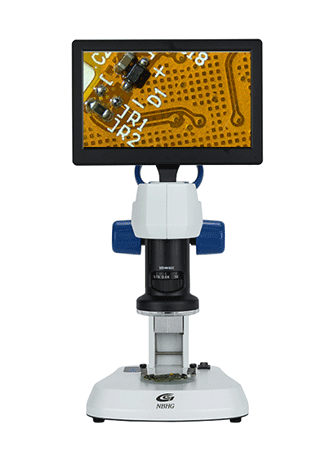
A low magnification digital microscope is commonly used when the operator needs an enlarged image but also wants to see a relatively broad area of the object. It can be useful for electronics, mechanical parts, jewelry, plastic products, education, laboratories, repair work, and quality inspection.
Low magnification can provide a wider field of view. This makes it easier to locate a target and inspect a larger surface area. High magnification is more suitable when the target is extremely small and requires greater enlargement. The right choice depends on the actual inspection task.
A TV digital microscope uses a camera to capture the microscope image and displays it on a TV or compatible screen. It allows users to observe the enlarged image digitally rather than relying only on direct eyepiece viewing.
Yes. It can be suitable for PCB inspection, component observation, connector checking, electronics repair, and other visual inspection tasks. The final performance depends on the target size, required detail, lighting, working distance, and selected optical configuration.
Yes. A low magnification digital microscope can be useful for checking jewelry surfaces, edges, workmanship, settings, and other visible details. If extremely small features need to be inspected, we recommend discussing the required magnification before ordering.
Yes. A screen makes it possible for several people to observe the same image. This is practical for classroom demonstrations, training sessions, laboratory instruction, and technician training.
The digital camera configuration can support image capture where the selected system provides this function. If image recording is important to your application, please specify this requirement when requesting a quotation so we can confirm the appropriate camera and software configuration.
The production cycle depends on the model, camera configuration, order quantity, component availability, and customization requirements. Standard models are generally easier to arrange, while customized products may require additional confirmation and preparation.
We check assembly quality, optical performance, focusing and mechanical functions, camera operation, accessories, appearance, and packaging. The exact inspection items can vary according to the product configuration and order requirements.
We use cushioning and dust-proof materials, individual packaging, and reinforced export cartons. The packaging is designed to reduce the risk of damage caused by impact and movement during international transportation.
Payment is arranged according to the order agreement. A common arrangement is a deposit followed by the balance before shipment. The exact terms should be confirmed with our sales team before the order is finalized.
Please tell us what you want to inspect, the approximate size of the object, the level of detail you need to see, the expected quantity, destination country, and whether you require image capture or other digital functions. Photos or samples of the inspection target can also be helpful when discussing a customized configuration.
Our Low Magnification TV Digital Microscope is designed for a very practical type of inspection: situations where users need magnified viewing without losing sight of the larger inspection area.
The combination of low magnification optics, digital camera imaging, and TV display provides a straightforward way to observe objects on a screen. It can be useful for electronics inspection, precision machinery, jewelry, plastic parts, education, laboratories, repair work, product development, and quality control.
We do not believe that one microscope is suitable for every application. The right product depends on the sample, working distance, required magnification, lighting, viewing method, and inspection goal. That is why we prefer to understand the customer's actual application before confirming the final configuration.
If you are searching for a Low Magnification TV Digital Microscope, low magnification digital microscope, TV digital microscope for inspection, or low magnification microscope for electronics and jewelry, Ningbo Huaguang can discuss the application, configuration, production schedule, packaging, and export requirements with you.
For us, a good microscope is not simply one with more specifications. It is one that makes the operator's daily work easier, provides a useful image, and remains practical after it has been installed on the workbench.
Add: No.70 Zhenxing East Road, Zhangshui Town,Haishu District,Ningbo City,Zhejiang,China
Contact Person: Mr. Xu Contact Number:+86 13777211956
Tel:+86 574-88152588/574-88152566
Fax:+86 574-88152570
Post Code:315161
E-mail:chinahg@hgopt.com

This website uses cookies to ensure you get the best experience on our website.
 中文
中文


 WhatsApp
 Phone
Phone E-mail
 Message