
 中文
中文


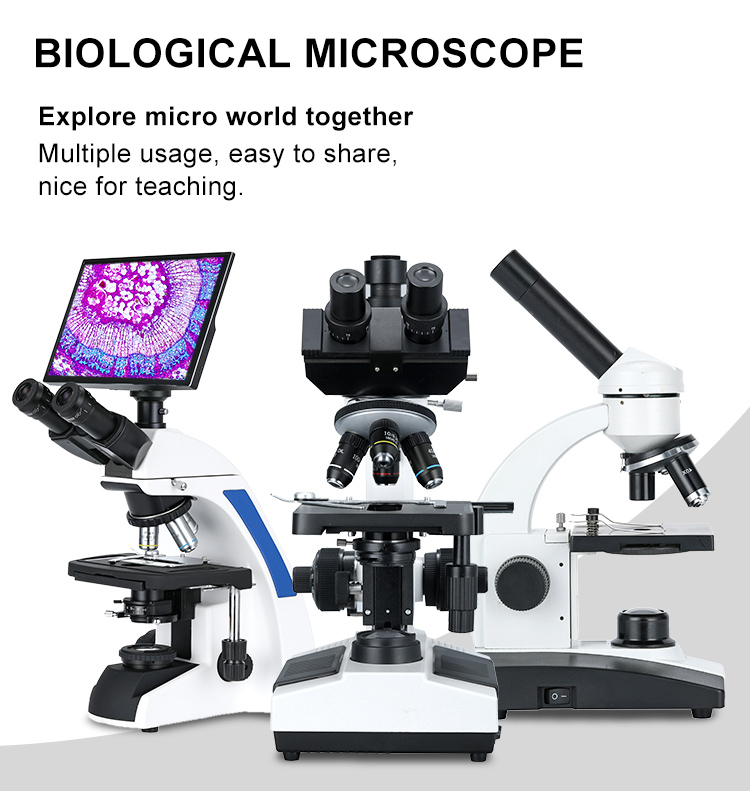

When I discuss microscope requirements with laboratory buyers, teachers, researchers, and equipment distributors, I usually ask one question first: what do you need to see, and how will you use the image after observation? A microscope for classroom teaching may focus on simple operation, while a laboratory system may also need comfortable binocular viewing, stable focusing, and digital image recording.
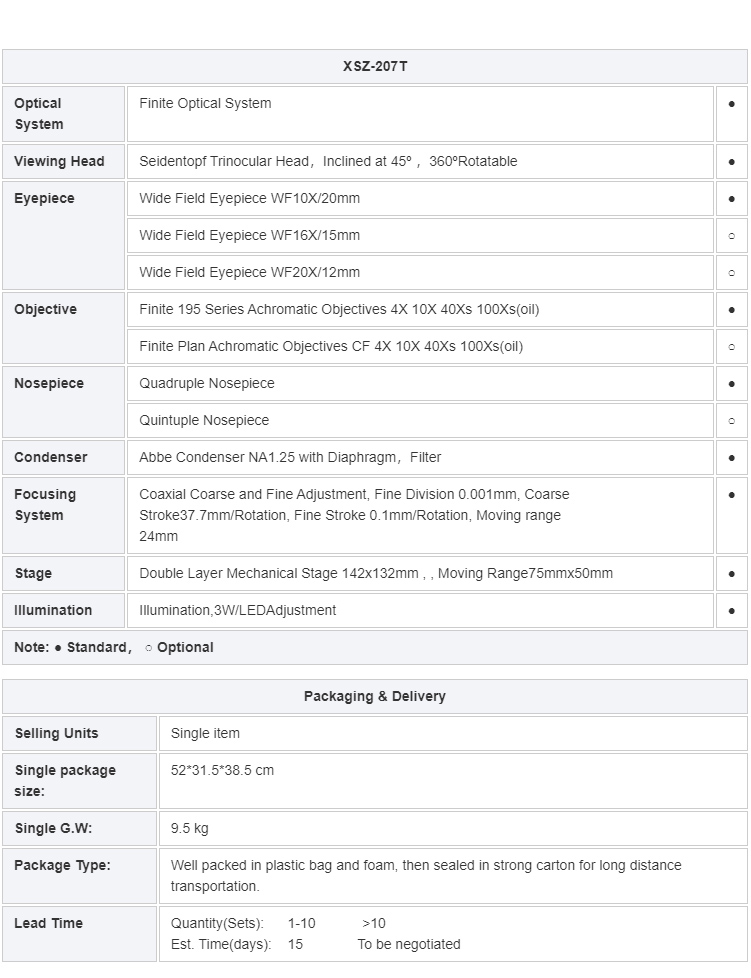
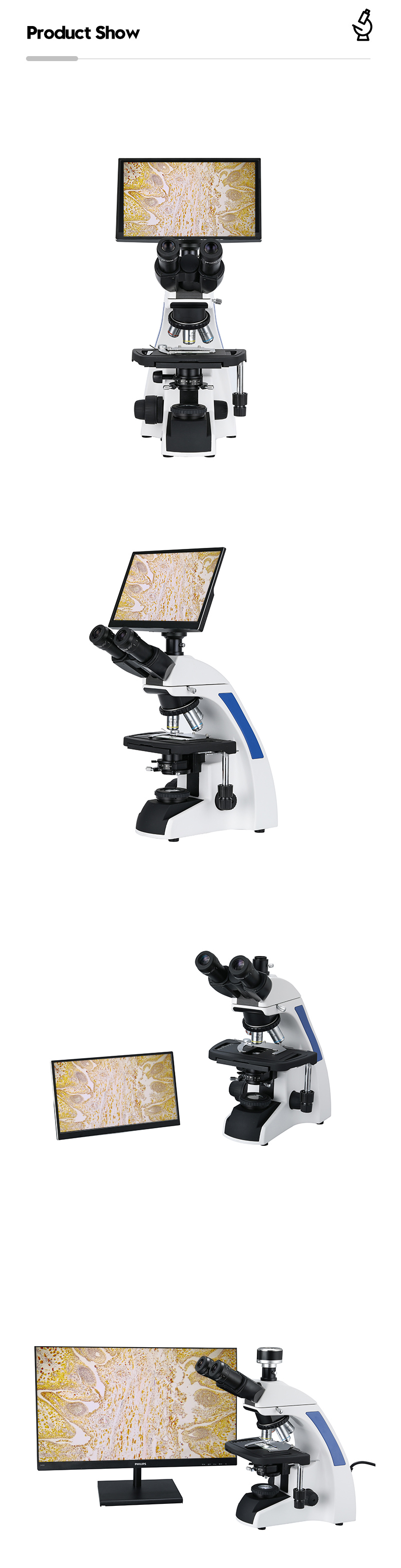
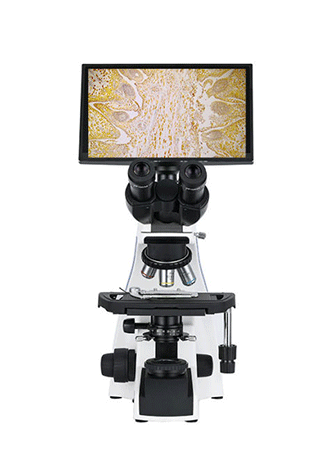
Our Biological Binocular Microscope with 5MP Camera is designed for users who want both direct optical observation and convenient digital imaging. The binocular viewing arrangement allows the operator to observe biological specimens through two eyepieces, while the 5MP camera provides a way to capture microscope images for teaching, inspection, research records, presentations, or internal communication.
At Ningbo Huaguang Precision Instrument Co., Ltd., we focus on practical optical instruments for real working environments. Our product range includes educational microscopes, Industrial Inspection microscopes, professional Jewelry Inspection microscopes, optical components, and precision injection molding products. Through these different product areas, we have developed a clear understanding of how optical quality, mechanical stability, user comfort, and manufacturing consistency work together.
This microscope is mainly intended for observing cells, tissues, microorganisms, prepared slides, and other biological specimens. The exact performance depends on the selected configuration, optical components, illumination, specimen preparation, and camera arrangement. For this reason, we prefer to confirm the customer’s actual application before recommending a final configuration.
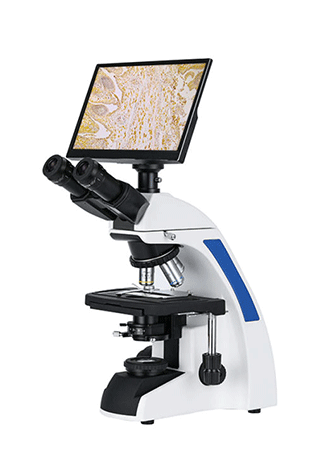
1. What Is a Biological Binocular Microscope with 5MP Camera?
A biological binocular microscope is an optical microscope designed for observing biological samples through two viewing eyepieces. Compared with a monocular microscope, the binocular arrangement allows the user to look through both eyes. This can make routine observation more comfortable, especially when the microscope is used for longer periods.
The camera adds a digital imaging function to the optical observation process. Instead of only looking through the eyepieces, the user can also send the microscope image to a suitable display or computer system, depending on the actual camera connection and supporting equipment.
The phrase 5MP Camera refers to a camera with approximately five million pixels. More pixels can provide more image information, but pixel count alone does not guarantee a perfect microscope image. The quality of the optical system, lighting, focus, camera sensor, software, display, and sample all affect the final result.
In simple terms, this product combines three useful functions:
Optical observation through a Biological Microscope
Comfortable viewing through a binocular head
Digital image capture through a 5MP camera
This combination is useful when the user needs to observe a specimen directly and also save or share the image. For example, a teacher may show a biological sample to students on a screen. A laboratory worker may save an image as part of a work record. A researcher may capture images for discussion or later comparison.
However, I always recommend confirming the camera connection, image output method, software compatibility, and included accessories before ordering. Different microscope and camera configurations may use different interfaces or supporting components.
2. How the Microscope and 5MP Camera Work Together
The basic working principle is based on visible light and optical lenses. The specimen is placed on the microscope stage. Light illuminates the sample, and the objective lens collects light from the specimen to form an enlarged image. The eyepiece then magnifies the image for direct viewing.
In a binocular microscope, the optical path is arranged so that the user can view the sample through two eyepieces. The two viewing channels provide a more natural observation experience for many users. The exact optical design depends on the microscope model.
When a camera is added, part of the microscope image is directed toward the camera sensor through a suitable camera port or optical adapter. The camera converts the optical image into digital information. The image can then be displayed, recorded, or used in a digital workflow according to the camera system.
The process can be understood in five simple steps:
The specimen is prepared and placed on the stage.
The illumination system provides light for observation.
The objective lens enlarges the specimen image.
The binocular viewing system allows direct observation.
The 5MP camera captures digital image information for display or recording.
The camera does not replace the optical system. If the microscope image is poorly focused, badly illuminated, or affected by a low-quality lens, the camera cannot fully correct the problem. The camera records what the optical system provides. This is why we pay attention to the complete microscope configuration rather than focusing only on the camera resolution.
Magnification and resolution are different
Magnification means making the image appear larger. Resolution means being able to distinguish two nearby details as separate points. A microscope may produce a very large image without showing more useful detail. This is sometimes called empty magnification.
For example, if two small structures are too close together for the optical system to resolve, increasing the digital image size will not necessarily separate them. A useful image requires a suitable relationship between objective lens quality, numerical aperture, illumination, camera pixel size, and magnification.
| Item | Meaning | Practical importance |
|---|---|---|
| Magnification | How large the specimen image appears | Helps users view small structures |
| Resolution | Ability to distinguish close details | Influences the actual clarity of the image |
| Contrast | Difference between the specimen and background | Makes biological structures easier to recognize |
| Pixel count | Number of pixels in a digital image | Provides image information for display and recording |
| Lighting | Light used to illuminate the sample | Affects brightness, contrast, and visibility |
Source: OpenStax Microbiology, “Instruments of Microscopy”; James Madison University, “Resolution, Magnification, and Size.”
3. Main Features of Our Biological Binocular Microscope
Binocular observation for routine laboratory work
The binocular viewing design is one of the main features of this microscope. Instead of using only one eyepiece, the user observes through two eyepieces. This arrangement is often preferred for teaching laboratories, research environments, and routine inspection because it can provide a more comfortable viewing experience.
Comfort matters more than many buyers expect. A user may spend several minutes or several hours observing samples. A suitable viewing arrangement can make it easier to maintain attention and reduce unnecessary operating discomfort.
5MP digital imaging
The integrated or supplied 5MP camera supports digital image capture. It can be useful for saving specimen images, sharing observations, preparing teaching materials, and keeping visual records.
A five-megapixel image contains more pixel information than many basic low-resolution cameras. However, the actual image quality also depends on the camera sensor, optical adapter, microscope objective, lighting, focus, and software settings. We therefore recommend testing the complete imaging system when a customer has strict requirements for image size, color, frame rate, or measurement.
Clear observation of biological specimens
The microscope is intended for observing cells, tissues, microorganisms, and prepared biological slides. With suitable sample preparation and optical configuration, users can examine structures that are too small to see clearly with the naked eye.
Clear observation depends on several small details. The slide should be clean and properly prepared. The specimen should be positioned correctly. The objective lens should be suitable for the required observation level. The illumination should be adjusted according to the sample. Finally, the focusing system should be operated carefully.
Practical focusing control
Focusing is used constantly during microscope operation. Users may need to adjust the image after changing objectives, moving to another area of the slide, or changing the sample. A practical focusing mechanism helps users obtain a sharp image without unnecessary difficulty.
For teaching laboratories, easy focusing is helpful because students are still learning the relationship between the objective lens, stage position, and image clarity. For professional users, stable focusing supports repeated observation and routine inspection.
Flexible use in digital teaching and inspection
The 5MP camera makes the microscope more suitable for situations where the image needs to be viewed by more than one person. Instead of asking every student or colleague to look through the eyepiece separately, the image may be displayed on a suitable screen according to the camera setup.
This can support:
Classroom demonstrations
Laboratory training
Research discussions
Specimen image recording
Internal quality checking
Digital teaching materials
Basic image comparison
4. Why a 5MP Camera Is Useful for Microscope Applications
When choosing a microscope camera, buyers often look at the megapixel number first. That is understandable, but I suggest looking at the complete imaging task. A 5MP camera can be a practical choice for users who need detailed images without necessarily requiring a very high-end research imaging system.
Image recording
A 5MP camera can capture digital images of suitable microscope specimens. These images may be used for records, reports, teaching presentations, product discussions, or sample comparisons.
For example, a biology teacher may capture an image of a prepared plant cell slide and use it in a lesson. A laboratory worker may save images of specimens observed during routine work. A student may use captured images to prepare a report or presentation.
Image sharing
Direct eyepiece observation is useful, but it is limited to the person looking through the microscope. A camera can make the image easier to share with a group. This is especially useful in classrooms, training rooms, and laboratory meetings.
Digital documentation
Digital images can help users maintain visual records. The usefulness of the record depends on correct focus, suitable lighting, proper sample identification, and consistent operating conditions. A clear file name and date can also make later review easier.
Support for comparison
When the same type of specimen is observed at different times, saved images may help users compare visible changes. However, the comparison should be made under similar conditions. Changes in magnification, lighting, focus, sample preparation, or camera settings may affect the result.
| Application | How digital imaging helps | Important consideration |
|---|---|---|
| Biology teaching | Allows a group to view the same specimen image | Display and camera connection should match |
| Laboratory training | Supports demonstrations and saved examples | Images should be properly focused |
| Research support | Provides visual records for discussion | Image conditions should be documented |
| Routine inspection | Helps record visible specimen details | Camera quality must match inspection needs |
| Sample comparison | Allows images to be reviewed later | Use consistent imaging conditions |
Source for general digital microscopy considerations: Nikon MicroscopyU, “Resolution”; Teledyne Vision Solutions, “Camera Resolution.”
5. Application Industries and Working Environments
Schools and biology classrooms
Schools are one of the most common environments for biological microscopes. Students can use prepared slides to explore cells, plant tissues, animal tissues, and microorganisms. The binocular viewing system can support comfortable observation, while the camera can help teachers show the image to a group.
A Microscope Used in a classroom should be practical and easy to manage. Teachers need to spend time explaining biology, not solving complicated equipment problems. Clear instructions, simple focusing, suitable lighting, and reliable accessories are therefore important.
Universities and teaching laboratories
Universities may use biological microscopes in biology, biotechnology, life science, environmental science, and laboratory training. Students can learn how to prepare slides, adjust microscope settings, observe specimens, and record findings.
The 5MP camera may be useful when instructors want to display a sample on a larger screen or prepare digital teaching content. It can also support group discussion when several students need to examine the same image.
Biological research laboratories
Researchers may use an Optical Biological Microscope for preliminary observation, routine sample checking, specimen comparison, and image recording. The exact use depends on the research project and sample type.
For advanced research, the microscope should be selected according to the required imaging method. Some projects may require phase contrast, fluorescence, darkfield, polarized light, or other specialized techniques. These functions should not be assumed to be included unless they are confirmed in the product configuration.
Medical laboratory training
A Medical Biological Microscope may be used for suitable medical laboratory education, training, and specimen observation. The binocular viewing system and digital camera can support demonstrations and image sharing.
At the same time, I recommend an important distinction: a microscope described as a medical biological microscope is not automatically approved for every clinical diagnostic procedure. The customer should confirm the intended use, applicable local regulations, complete system configuration, documentation, and validation requirements before using it in a regulated medical environment.
Environmental and educational sample observation
Biological microscopes can also support environmental science projects and basic sample observation. Users may examine prepared water samples, plant materials, or other specimens selected for safe educational use.
In these applications, the microscope helps users see small structures, but it does not independently identify every organism or confirm every scientific conclusion. Proper sample preparation and user knowledge remain important.
6. How We Manufacture and Inspect the Microscope
At Ningbo Huaguang Precision Instrument Co., Ltd., we believe that reliable microscope quality comes from careful work at every stage. Optical instruments contain many parts that must work together. A problem in assembly, focusing, alignment, packaging, or accessory matching may affect the user experience.
Requirement confirmation
We begin by confirming the customer’s intended application, product model, quantity, optical configuration, camera requirements, accessories, packaging, and delivery destination. This step is important because a microscope for classroom teaching may not need the same arrangement as a microscope for research or laboratory inspection.
Component preparation
Optical, mechanical, and structural components are prepared according to the agreed configuration. Component availability can influence the production schedule, particularly when the customer requests special accessories or customized arrangements.
Mechanical assembly
The frame, stage, focusing mechanism, viewing head, and related parts are assembled carefully. The goal is to provide a stable instrument that can be handled conveniently during routine operation.
Optical assembly
The optical components are fitted into the microscope system and checked as part of the complete assembly. We pay attention to the relationship between the objective lenses, viewing system, illumination, and focusing mechanism.
Camera installation and checking
For a microscope supplied with a 5MP camera, the camera arrangement should be checked together with the microscope. The camera connection, image output, optical adapter, and display or software requirements should match the agreed configuration.
Performance and appearance inspection
Before shipment, microscopes should undergo assembly inspection, optical performance checking, focusing and mechanical function testing, and appearance inspection. We also check the product quantity, accessories, and packaging against the order requirements.
Packaging inspection
Microscopes are precision instruments, so packaging must be treated seriously. We normally use inner cushioning, dust-proof materials, and an individual box, followed by reinforced export cartons or other suitable outer packaging.
The final packaging method depends on the microscope size, order quantity, destination, and transportation method. The aim is to reduce the risk of shock, dust, pressure, and handling damage during delivery.
7. How to Choose the Right Biological Binocular Microscope with 5MP Camera
Before purchasing, I suggest checking the following points. These questions help avoid buying a microscope that looks suitable on paper but does not match the real working conditions.
Confirm the specimen
Are you observing prepared slides, plant tissues, animal tissues, microorganisms, or another type of biological sample? The specimen type affects the suitable objective lenses, illumination, contrast method, and focusing requirements.
Confirm the viewing method
Do users need direct binocular observation, digital display observation, or both? If the microscope will be used for teaching, the camera and display arrangement may be particularly important.
Confirm the camera requirements
Although the product name includes a 5MP Camera, buyers should still confirm the exact camera model, connection method, output format, software, image size, and included accessories. If the customer needs measurement, video recording, or special image processing, these requirements should be discussed before ordering.
Confirm the optical configuration
Magnification should match the sample. A higher number is not always better. The objective lens, eyepiece, illumination, and camera should work together to provide a useful image.
Confirm the working environment
Consider whether the microscope will be used in a classroom, laboratory, research room, medical training environment, or inspection area. The operating frequency, user experience, available space, and maintenance conditions may affect the final selection.
Confirm accessories and documents
Before placing an order, confirm the included objectives, eyepieces, camera, adapter, power supply, software, user documentation, inspection documents, and other accessories. The delivered items should match the sales agreement.
8. Why Choose Ningbo Huaguang Precision Instrument Co., Ltd.?
Ningbo Huaguang Precision Instrument Co., Ltd. is located in Haishu District, Ningbo, with convenient transportation and a pleasant working environment. We are engaged in the production of educational microscopes, industrial inspection microscopes, professional jewelry inspection microscopes, optical components, and precision injection molding products.
Our experience covers different optical application areas. Educational microscopes require practical operation and user-friendly design. Industrial inspection microscopes require attention to small details and stable viewing. Jewelry inspection microscopes require close observation of surfaces, stones, and fine workmanship. These applications have helped us understand the importance of matching product design with actual user needs.
Our products are exported to more than 20 countries and regions, including America, Brazil, Germany, the Netherlands, and Japan. International orders require clear communication about configuration, packaging, documents, payment, transportation, and after-sales service.
We have been certified to the ISO9001 Quality Management System, and our products have been certified to CE and RoHS according to applicable product requirements. We also develop nanometer photocatalytic air purifiers and air-conditioning purification equipment.
Our company credo is “Nothing is perfect only better and better.” We apply this idea to product design, assembly, inspection, customer communication, and service. We understand that customers need more than a product catalogue. They need clear information, suitable configuration, dependable delivery, and support when questions arise.
Our service includes
Application-based product discussion
Microscope and camera configuration confirmation
Accessory and documentation checking
Production schedule communication
Assembly and optical performance inspection
Suitable inner and export packaging
Air, sea, express, or other suitable transportation
After-sales communication for product questions
9. Production, Payment, Delivery, and Packaging
The production cycle of the Biological Binocular Microscope with 5MP Camera depends on the model, order quantity, configuration, and component availability. Standard models are typically arranged faster than customized products. If the order includes special accessories, packaging, colors, or camera requirements, the schedule should be confirmed separately.
Before production, we recommend confirming:
Microscope model
Binocular viewing configuration
5MP camera arrangement
Objective and eyepiece requirements
Illumination requirements
Display, computer, or software requirements
Accessories and spare parts
Quantity and destination
Required documents
Packaging and delivery schedule
Payment terms can be arranged according to the order agreement. A common arrangement includes a deposit with the balance paid before shipment. The final payment method and schedule should be confirmed in the sales contract.
Transportation can be arranged by air, sea, express delivery, or another suitable logistics method. The choice depends on the destination, order size, delivery time, and budget.
For packaging, each microscope is normally protected with inner cushioning, dust-proof materials, and an individual box. Reinforced export cartons or other suitable outer packaging are then used to reduce the risk of damage during handling and transportation.
10. Frequently Asked Questions
What is a Biological Binocular Microscope with 5MP Camera used for?
It is used for observing biological specimens such as cells, tissues, microorganisms, and prepared slides. The binocular viewing system supports direct observation, while the 5MP camera supports digital image capture, teaching, documentation, and suitable laboratory applications.
What does 5MP mean?
5MP means approximately five million pixels. It describes the image pixel count of the camera. The final image quality also depends on the microscope optics, lighting, focus, camera sensor, adapter, and software.
Is binocular viewing more comfortable than monocular viewing?
Many users find binocular viewing more comfortable for routine observation because both eyes can be used. Comfort also depends on the viewing angle, eyepiece arrangement, user position, focusing, and working habits.
Can the camera display the image on a computer or screen?
This depends on the exact camera model, connection method, software, and included accessories. Buyers should confirm the required output and display arrangement before ordering.
Can this microscope be used in a medical laboratory?
It may be suitable for certain medical laboratory training, biological observation, or routine inspection applications according to the selected configuration. For regulated clinical or diagnostic use, customers should confirm local requirements, intended use, documentation, and validation conditions.
Does the microscope include all objectives and accessories?
The included accessories depend on the agreed product configuration. Please confirm the objective lenses, eyepieces, camera, adapter, software, power supply, and other accessories before placing an order.
Can I order a customized microscope?
Customized requirements can be discussed according to the model, quantity, configuration, component availability, packaging, and application. Customized orders may require additional production time.
How long is the production cycle?
The production cycle depends on the model, order quantity, configuration, and component availability. Standard models are generally arranged faster than customized products. We confirm the schedule after reviewing the order details.
How is the microscope checked before shipment?
Before shipment, the microscope should undergo assembly inspection, optical performance checking, focusing and mechanical function testing, appearance inspection, accessory checking, and packaging inspection.
How is the microscope packaged?
We normally use inner cushioning, dust-proof materials, and an individual box, followed by reinforced export cartons or other suitable outer packaging. The exact method depends on the product and transportation requirements.
Conclusion
The right microscope should match the sample, the user, and the working process. For biological observation, clear optics and stable focusing are important. For shared teaching or digital documentation, a camera can add useful flexibility. For longer observation sessions, binocular viewing may improve comfort.
Our Biological Binocular Microscope with 5MP Camera combines direct binocular observation with digital image capture for schools, universities, laboratories, research support, medical laboratory training, and other suitable applications. We focus on practical optical design, stable product quality, careful inspection, suitable packaging, and clear communication throughout the order process.
If you are selecting a Biological Binocular Microscope with 5MP Camera, please share your specimen type, intended application, required magnification, camera output needs, quantity, and destination. We can then discuss the suitable configuration and provide more accurate product information for your project.


 WhatsApp
 Phone
Phone E-mail
 Message